
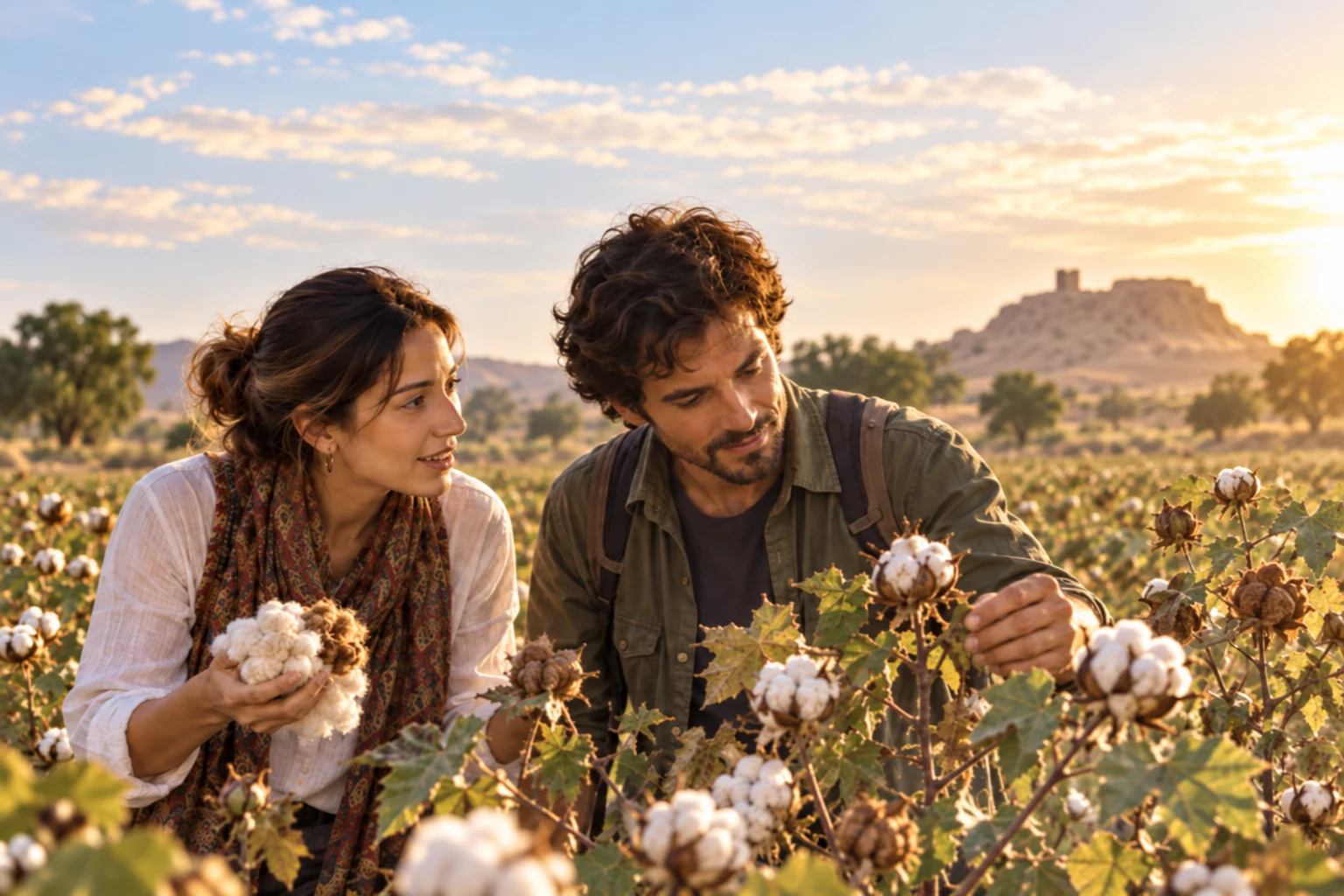

Julián Verde had grown up in Lambayeque surrounded by a landscape he thought he understood: the dry northern coast, fields interrupted by stretches of desert, villages where traditions seemed to survive almost casually, museums filled with objects left behind by civilizations that had flourished there long before Peru had a name. And cotton.
Cotton was simply part of the landscape. Until one day it wasn't. It became a question. Julián is a young researcher. His girlfriend, Ángeles Ruiz, is a researcher too. Both share the dangerous habit of asking one question and discovering five more behind it.
Their latest question seemed simple: How could people living on Peru's northern coast thousands of years ago have transformed cotton so profoundly? The answer would take them across northern Peru, into archaeological collections, laboratories and cotton fields, and into conversations with researchers, farmers and artisans. Eventually, it would lead them into a history neither of them had expected—a history involving genetics, fishing nets, colors growing naturally from plants, a six-thousand-year-old blue textile, a twentieth-century attempt to eradicate an ancient crop, and families who quietly refused to let it disappear.
The Journey Begins in Northern Peru
For Julián, the journey had an unexpected beginning. Home. He was born in Lambayeque. But returning as a researcher made him look at familiar things differently. A plant beside a house was no longer simply a plant. An old woman spinning cotton was no longer simply practicing a craft. And a handful of naturally brown fiber could contain information stretching backward through hundreds of generations. One morning, Ángeles held several samples together.
White. Cream. Brown. A pale green. “None of these are dyed?” “No.” She looked again. That was the moment the journey really began.
Before There Were Looms, There Was Cotton
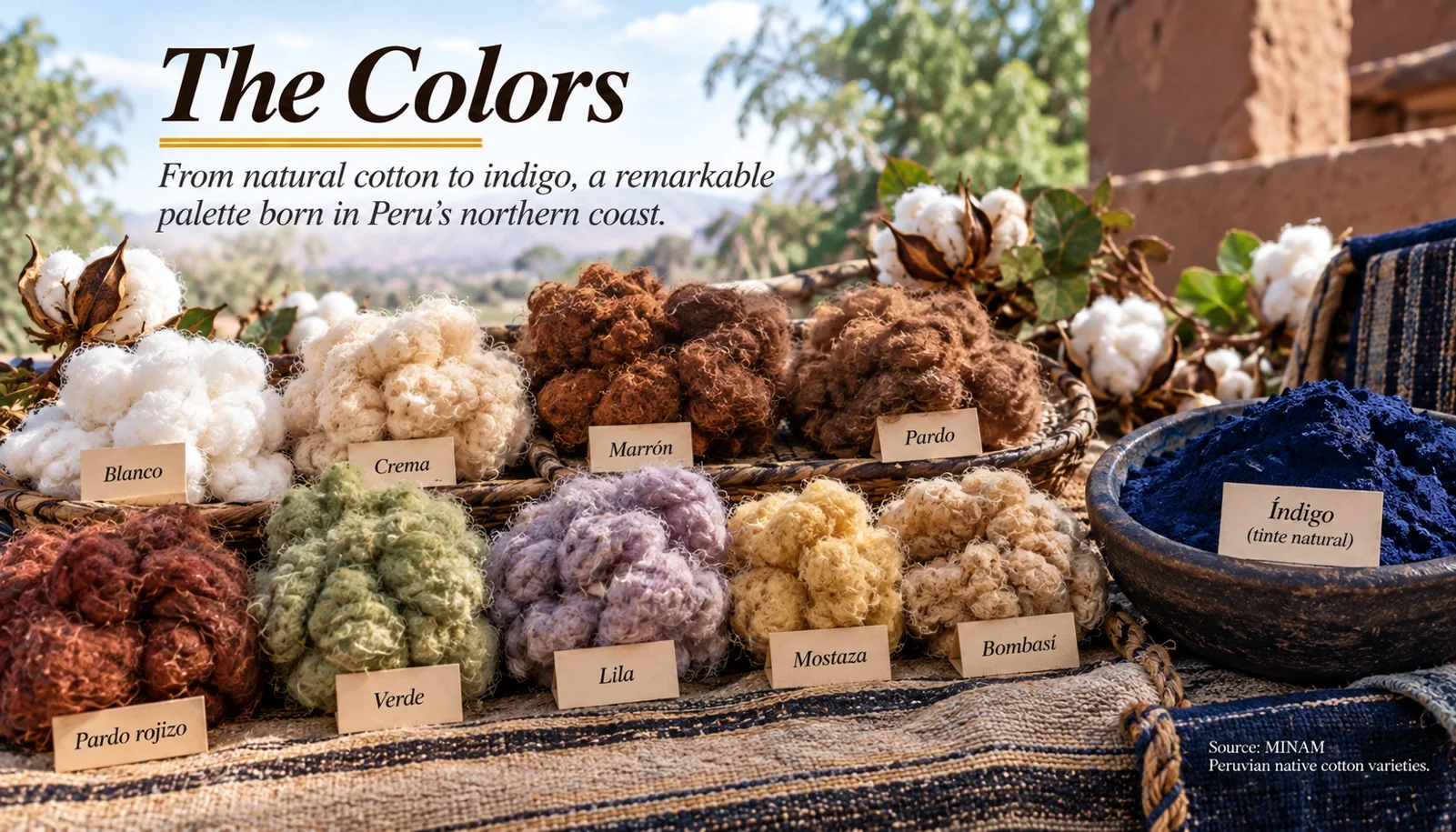
The deeper Julián and Ángeles went into the story, the further backward it seemed to travel. Archaeological evidence places cultivated Gossypium barbadense in the ancient Andes at least 7,800 years ago. At Huaca Prieta, on Peru's north coast, cotton yarn has been recovered from levels dating to approximately 6,700 years ago. This was before the Inca. Long before the Moche. Long before many of the things we instinctively associate with ancient Peru. And cotton was not simply about clothing.
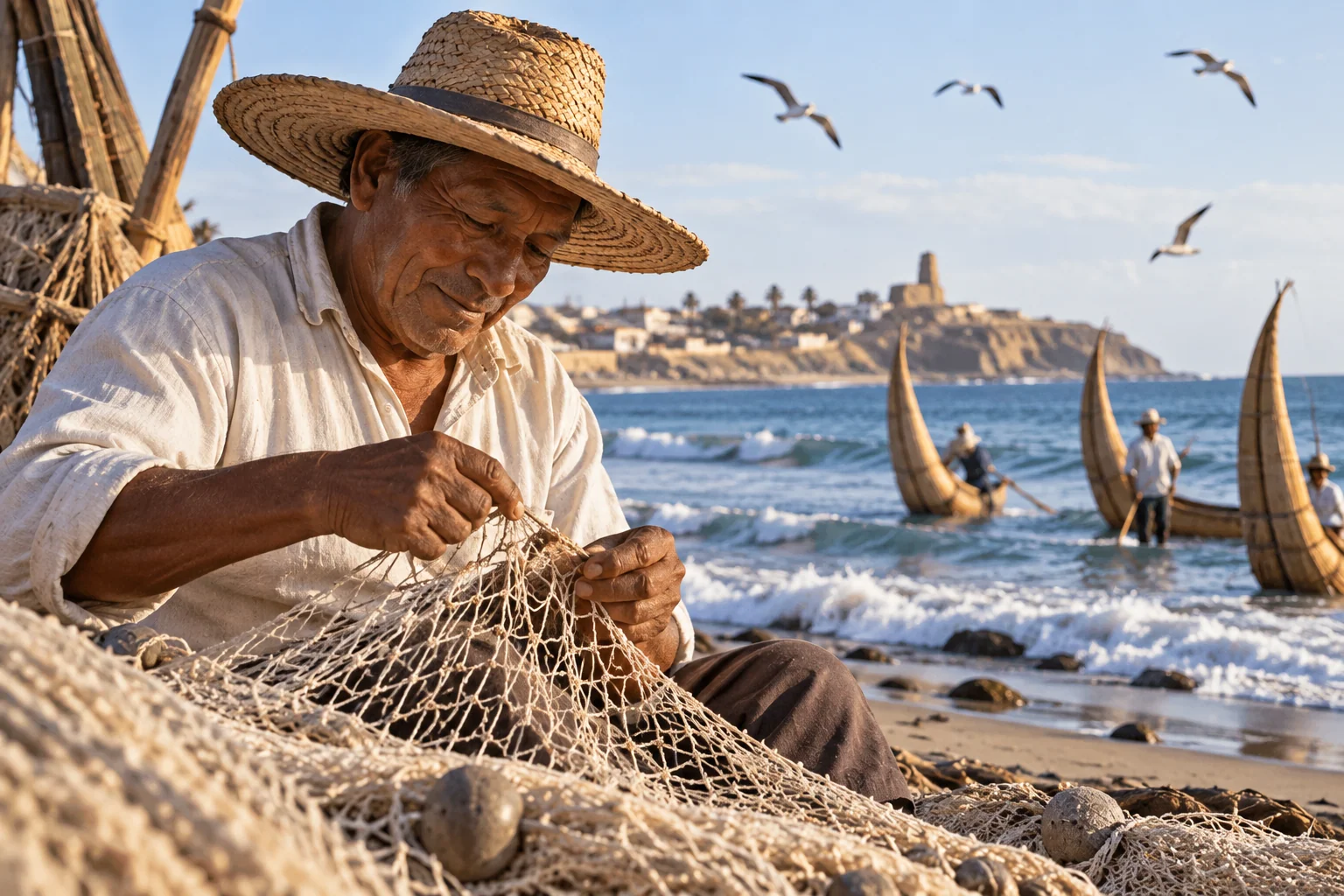
It made bags and cordage—and, crucially, fishing nets. That changed the way Julián saw the relationship between the desert and the Pacific. People cultivated cotton on land. Cotton became nets. Nets harvested the sea. The sea fed communities. A plant growing in an arid landscape had become part of a system connecting agriculture with one of the richest marine environments on Earth.
“Maybe,” Julián said, looking toward the Pacific, “we've been thinking about cotton as clothing because that's what it means to us.” Ángeles smiled. “To them, it might also have meant dinner.”
The Natural Colors of Peruvian Cotton
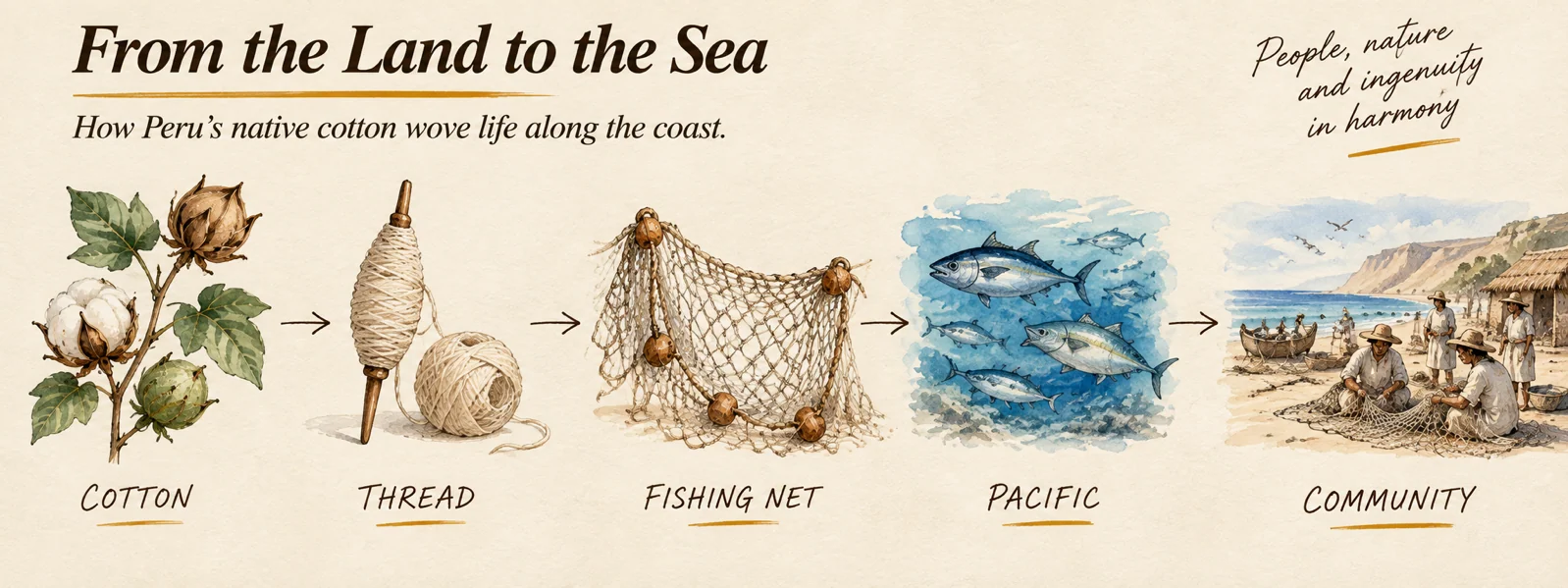
But what captivated the two researchers most was color. Native Peruvian cotton does something that surprises almost everyone seeing it for the first time. It grows already colored. Different native varieties produce naturally pigmented fibers, including brown, cream and green tones. Modern institutions regard this diversity as a valuable genetic and cultural resource. In Lambayeque today, government agencies, producers and artisans continue working to conserve native colored cotton and the traditions associated with it. Julián and Ángeles began asking another question:
How? The people who first cultivated these plants knew nothing of DNA. They had never heard the word chromosome. They could not have described genes, enzymes or biochemical pathways. But they understood something perhaps even more fundamental. They understood observation. A plant produced an interesting fiber. Someone noticed. Seeds were saved. Another generation was planted. Certain characteristics were preferred. Again and again, generation after generation.
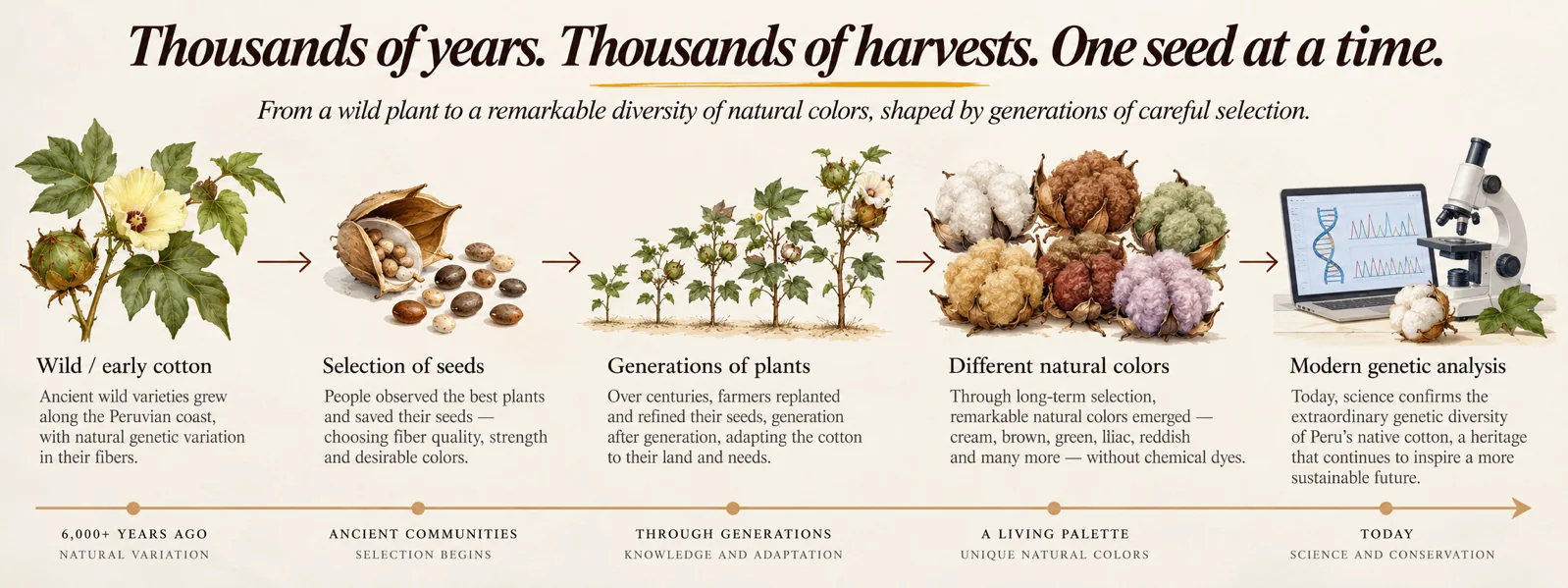
What today can be examined through genetics and biochemistry was achieved by ancient farmers through observation, selection and an extraordinary accumulation of experience. Ángeles rolled a naturally brown fiber between her fingers. “Imagine how many human decisions are inside this color.”
And Someone Wanted Blue: Indigo in Ancient Peru
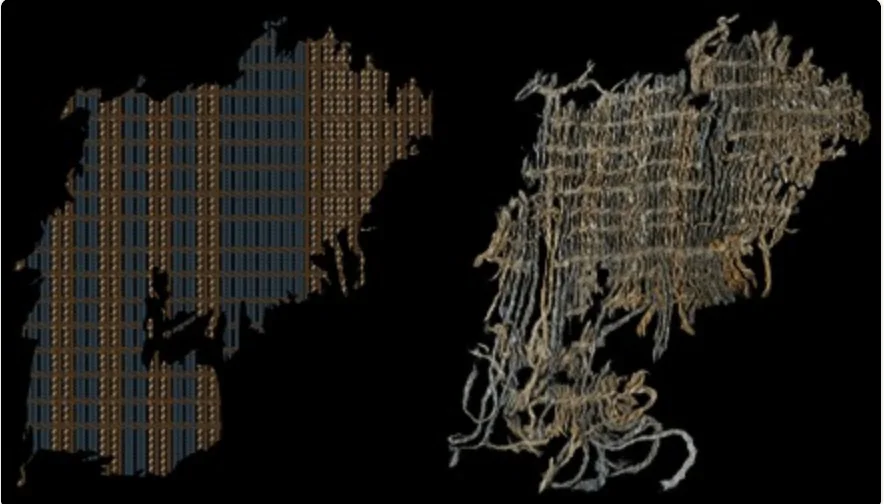
Nature supplied color. Human imagination wanted more. At Huaca Prieta, researchers discovered something extraordinary in ancient cotton textiles: blue.
Scientific analysis identified indigotin in cotton fabrics approximately 6,000 years old. It is currently the earliest confirmed use of indigo dye known anywhere in the world—roughly 1,500 years earlier than the earliest documented Old World example. Julián stared at the reproduction of the textile. Six thousand years ago, someone had looked at cotton and apparently decided its existing colors were not enough.
They wanted blue. They experimented, discovered a process and somehow made it work. Ángeles laughed. “Six thousand years later, we think blue jeans are modern.”
Then Peru Tried to Erase the Colors
And then the story took a turn neither Julián nor Ángeles expected. After thousands of years of cultivation, selection and adaptation, native colored cotton became undesirable. Commercial agriculture had changed. White cotton dominated industrial demand. Native cotton was considered a potential host for pests affecting commercial varieties, while agricultural regulations also sought to prevent unwanted crosses with commercial cotton. By 1940, cultivation of native colored cotton had been prohibited. Accounts describe plants being destroyed and the crop retreating into small domestic plots and isolated areas of northern Peru. Later regulations continued restricting the native “País” variety in commercial cotton valleys.
Julián found this chapter difficult to accept. “Thousands of years creating diversity. And then we decided diversity was the problem.” He paused. “To me, that sounds like a period of obscurantism.” The word was deliberately strong. There had been agricultural and phytosanitary arguments behind the restrictions, and they should not simply be erased from history.
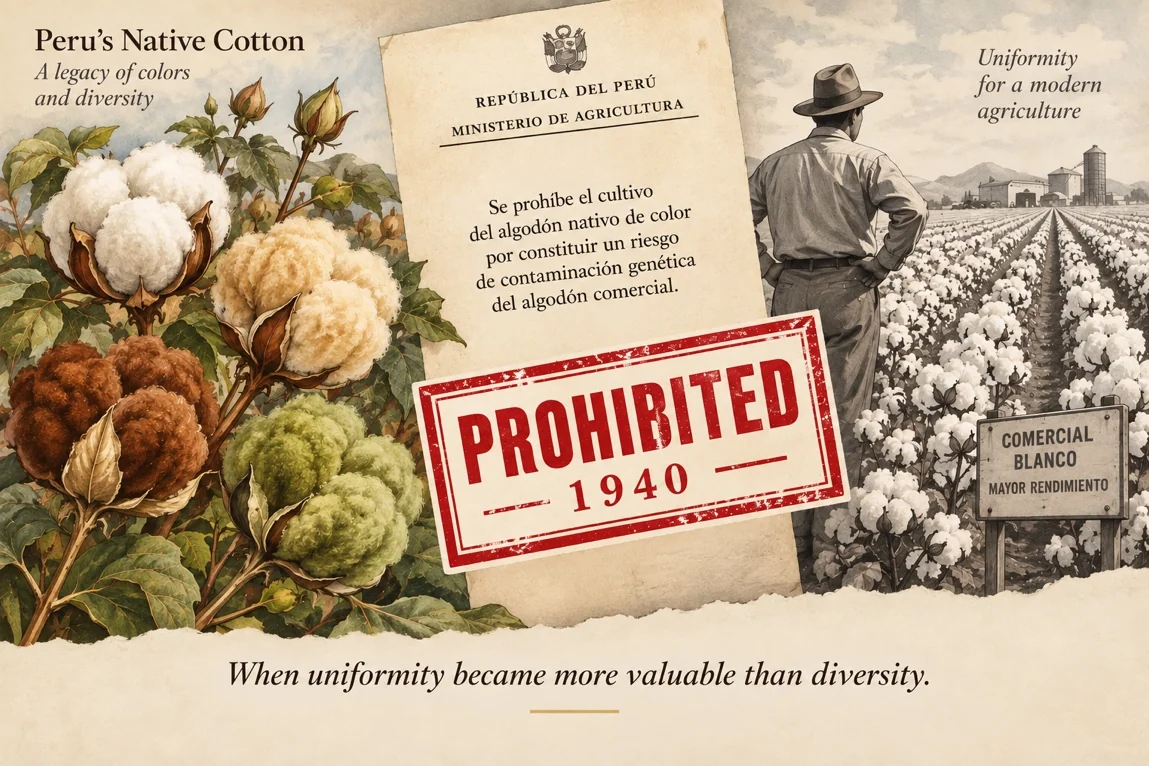
But viewed from the present, Julián couldn't escape the contradiction. An extraordinary genetic resource created and preserved over millennia was being evaluated primarily according to the requirements of twentieth-century commercial agriculture. Colors that had survived civilizations were suddenly something to eliminate.
But Someone Kept the Seeds
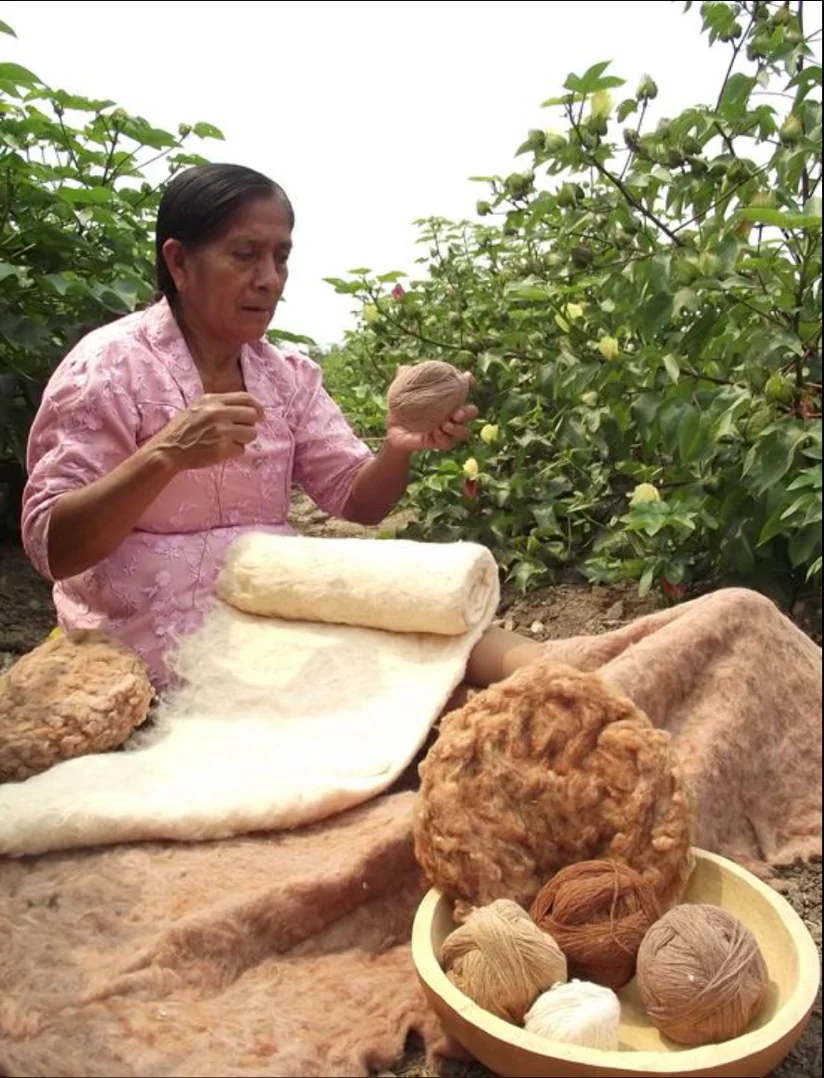
The story could have ended there. It didn't. Native cotton survived—not because a great institution had immediately decided to rescue it, but partly because people kept it. In northern Peru, it continued in family gardens, along field boundaries, in small plots and as part of rural traditions. Congressional documentation later recorded native cotton surviving in La Libertad, Lambayeque and Piura in precisely these kinds of settings. Farmers planted it. Families protected it. Artisans continued spinning and weaving it.
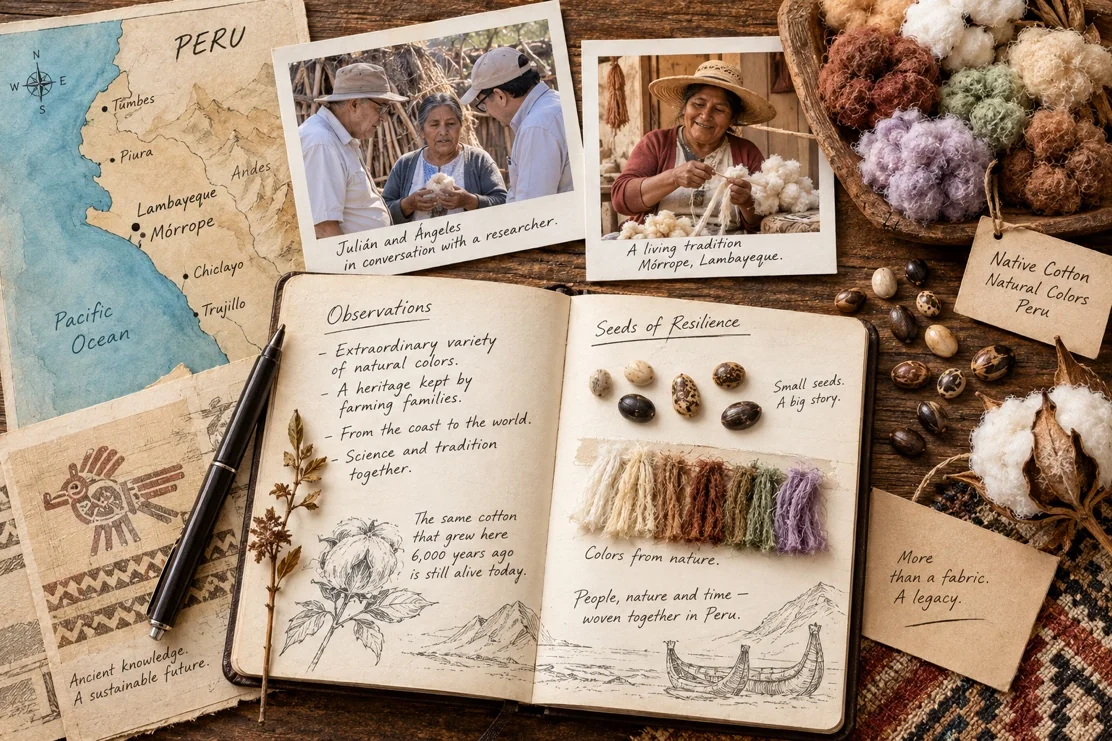
Sometimes what institutions considered obsolete, communities considered theirs. Julián and Ángeles began meeting people for whom cotton was not an archaeological artifact. It was alive. A woman could identify fibers by touch. Someone knew which seeds produced which shades. Another remembered how her mother had spun them. Knowledge had moved from hand to hand, generation to generation. The researchers suddenly understood something important: The cotton had survived because the tradition had survived with it.
Science Returns to Peru's Native Cotton
Decades later, the question changed. What if this cotton wasn't an obstacle to progress? What if it was something extraordinarily valuable? Researchers began recovering, classifying and studying native varieties. Genetic diversity that had once complicated agricultural uniformity became precisely what scientists wanted to understand and preserve.
The reversal was remarkable. In 2006, Lambayeque recognized native cotton as part of its natural heritage. And in 2008, Peru passed Law No. 29224. Its language could hardly have been more different from the policies of eradication. The law declared the native Peruvian “País” cotton part of the nation's Genetic, Ethnic and Cultural Heritage and called for its rescue, recovery, conservation and promotion. Sixty-eight years after the prohibition reported in 1940, the plant had gone from something to eliminate to something Peru officially wanted to save.
Ángeles looked at Julián. “So who rescued it?” He thought about the question. Scientists helped. Institutions helped. Legislation eventually helped. But before them were people who had simply kept the seeds.
A Genetic Library Written in Cotton
This was perhaps the idea that fascinated Julián most. A seed is tiny. Yet inside it sits genetic information accumulated through an immense chain of reproduction and selection. Some native cotton varieties carry natural pigmentation. Others have characteristics connected with adaptation to the dry conditions of the Peruvian coast.
Modern researchers can study traits, compare varieties and preserve germplasm in ways ancient farmers never could. But science is reading a book whose first chapters were written long before laboratories existed. Research in Mórrope has documented both surviving ecotypes and the danger of continuing loss; in one study, 88 percent of respondents said native varieties were disappearing or had already disappeared.
For Julián, this transformed the meaning of conservation. Saving an old cotton variety wasn't nostalgia. It meant preserving possibilities: resistance, adaptation, color—or something science hasn't even thought to look for yet.
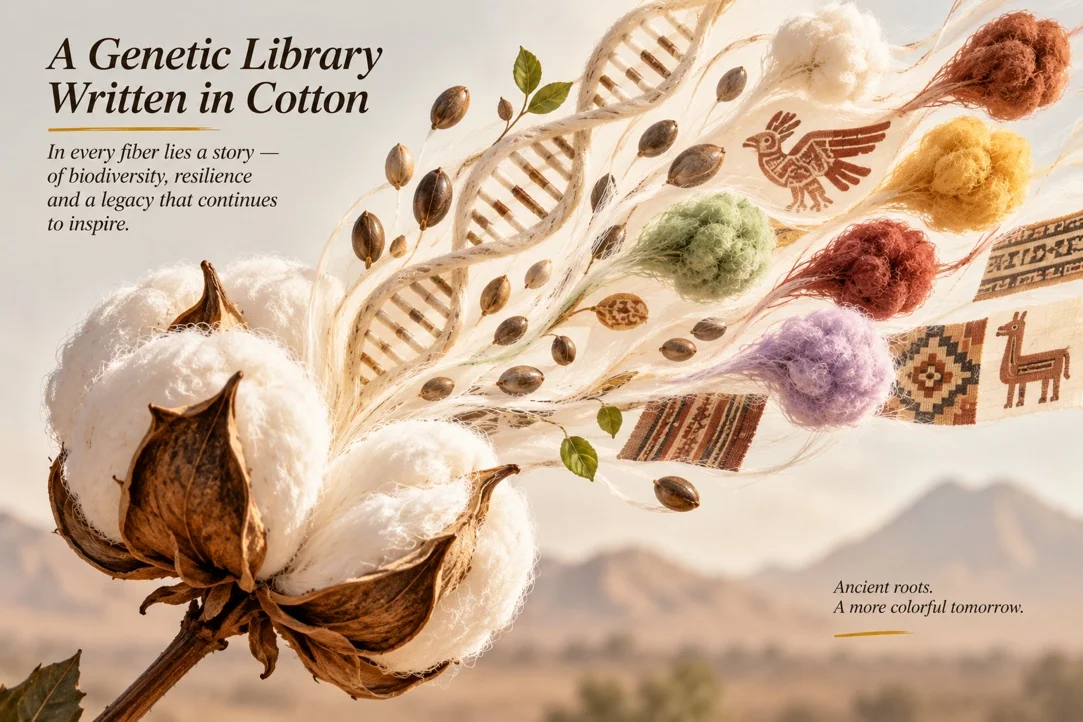
Every lost variety is a page torn from a genetic library before we have finished reading it.
The Conversations Along the Road
But Julián and Ángeles did not want their research to remain inside laboratories. They traveled. They listened. An archaeologist explained what a tiny fragment of ancient fiber could reveal. A geneticist described inherited characteristics. A farmer talked about seeds. An artisan talked about color without ever needing the vocabulary of molecular biology.
Sometimes the same phenomenon was being described in completely different languages. Science called it inheritance; the farmer called it knowing which seed to keep. Science spoke about phenotypes; the artisan simply knew the color that would emerge.
And somewhere between those conversations, Julián and Ángeles began to understand that their book would need both worlds. Because neither story was complete without the other.
The Journey Doesn't End Here
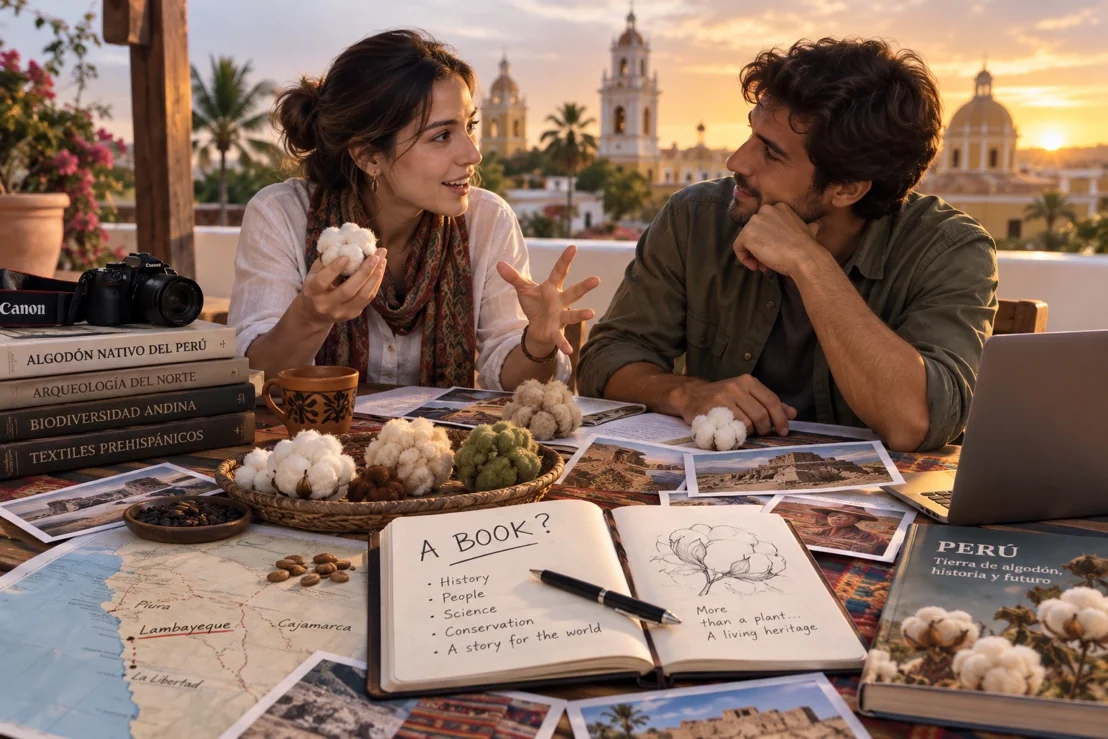
Somewhere along the journey, Ángeles began thinking beyond the research itself. They had accumulated notebooks filled with conversations, archaeological references, photographs, stories from farmers and artisans, questions about genetics and discoveries that had repeatedly surprised them. One evening, she turned to Julián with the excitement of someone who has just realized that an idea is bigger than she first imagined. “We should write a book.” Not an academic catalogue. Not simply a history of cotton. A book about the journey they were making and the extraordinary things they were discovering along the way: a plant cultivated on Peru's northern coast thousands of years ago; naturally colored fibers; ancient farmers shaping a plant through generations of observation and selection; cotton fishing nets connecting agriculture with the Pacific; someone discovering how to make cotton blue six thousand years ago; a period of obscurantism when Peru nearly turned its back on its own genetic heritage; and the farmers, artisans and families who kept the seeds alive.
“People outside Peru should know this story,” Ángeles said. And then came another idea. Perhaps the book could be only the beginning. They imagined taking the story beyond Peru, perhaps with the support of an international foundation interested in biodiversity, cultural heritage, archaeology or traditional knowledge. To universities in the United States. Not simply to deliver another academic lecture, but to bring something tangible with them: cotton, seeds, images, ancient textiles, stories—and questions.
Julián imagined a university auditorium. Students who had never seen cotton growing naturally in different colors. Ángeles placing several samples on a table. White. Cream. Brown. Green. And then asking: “How old do you think this technology is?” The answer would lead them back thousands of years to Peru's northern coast. They had started by investigating a plant. Now Ángeles wanted to write its story. And perhaps one day, they would travel together again—this time carrying the extraordinary story of Peruvian cotton from the fields of Lambayeque into classrooms thousands of miles away.
The Color in Ángeles' Hand
Near the end of one of their days in northern Peru, Ángeles held a small piece of naturally brown cotton in her palm. There was nothing spectacular about it at first glance. It wasn't gold. It wasn't a precious stone. It was simply fiber. But Julián no longer saw it that way.
Inside that handful of cotton was a journey: ancient farmers selecting seeds, fishermen casting cotton nets into the Pacific, hands learning to spin, someone discovering how to make cotton blue six thousand years ago, families refusing to abandon native plants, a period Julián calls an obscurantism, researchers returning to study what remained, and a new generation trying to understand what the old one had known. Ángeles closed her fingers around the cotton. They still had interviews to conduct, questions to answer, a book to finish and presentations to prepare. But Julián had finally understood something about the land where he was born. He had started this journey believing he was researching an ancient Peruvian plant.
He was wrong. He was researching a conversation between people and nature that had begun thousands of years ago. And against extraordinary odds, that conversation had never completely stopped. Ángeles opened her hand again. The little piece of brown cotton was still there.
Six thousand years of human curiosity, resting in her palm.