

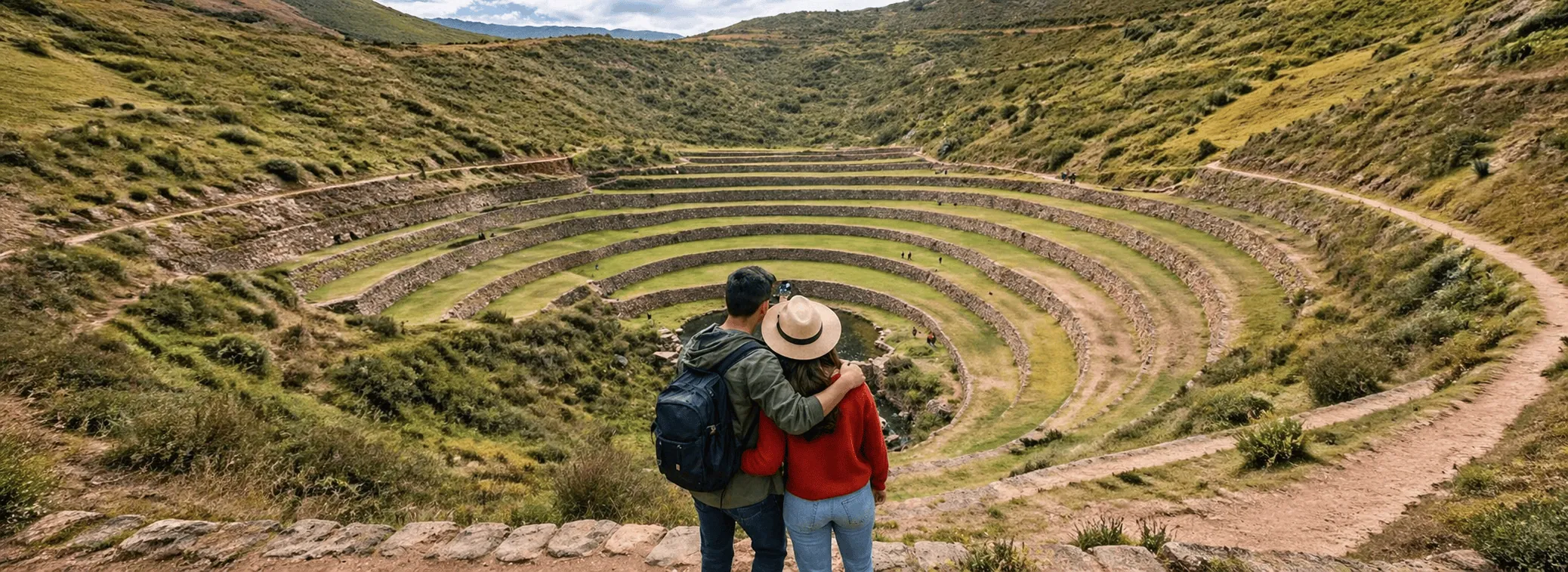
The first thing you notice about Moray is not the terraces—it is the silence. In the Sacred Valley, concentric circles descend into the earth like a giant staircase, still speaking of a conversation between people and nature that began centuries ago.
The laboratory of the sun
At dawn, three immense circular depressions emerge from the mist. The largest drops more than 30 meters, its stone rings forming a natural amphitheater that seems to gather light and sound.
Moray was not merely ceremonial. It was one of the world's earliest agricultural research laboratories, where the Incas studied how to feed an empire across radically different climates.
A miracle of microclimates
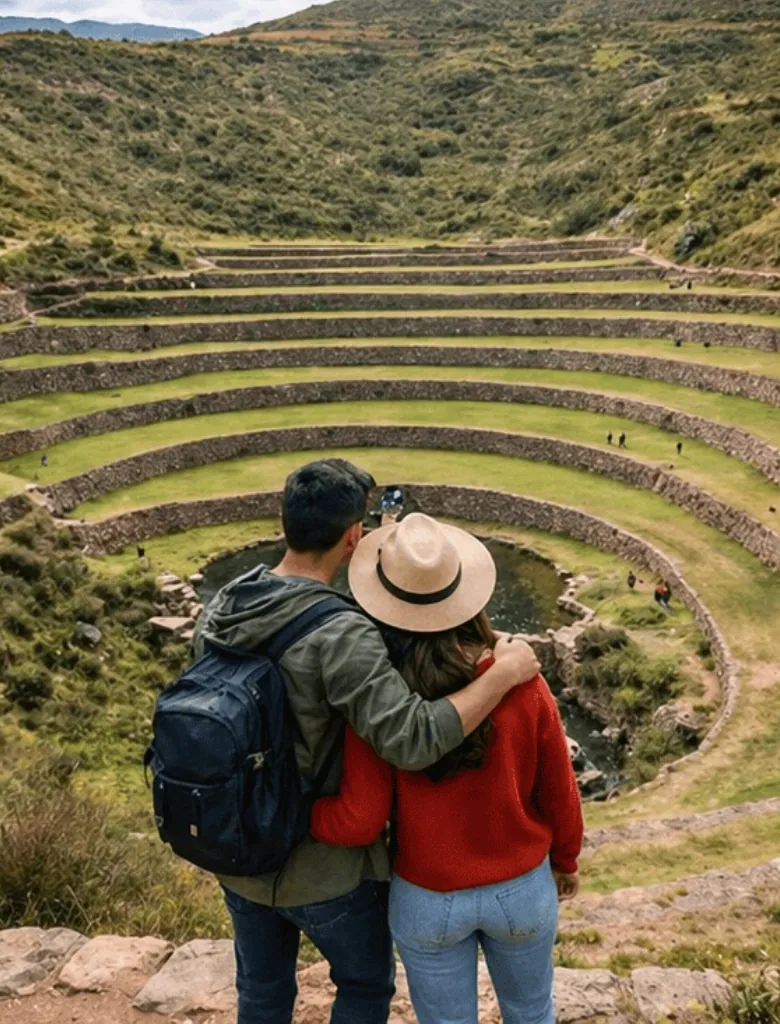
Each terrace sits at a different elevation, creating a temperature difference of about 15°C from the top to the bottom. Cool upper levels supported potatoes and quinoa; warmer levels made space for maize, beans and more tropical crops.
Stone walls absorbed heat during the day and released it at night, protecting crops from frost. The Incas were not simply farmers: they were botanists, meteorologists and careful observers of the land.
Science written in stone
Modern studies have documented differences in temperature, humidity, soil and drainage across Moray's levels. Archaeological evidence suggests experimentation with crop varieties adapted to disease, drought and frost.
Every terrace wall and water channel was constructed with purpose. The same precision let the structures manage rain, resist erosion and flex during earthquakes.
Food as an empire's foundation
Tawantinsuyu was built on food security. The Incas organized farms, storehouses and distribution networks while cultivating an extraordinary diversity of potatoes, quinoa, maize, kiwicha and Andean tubers.
They understood that diversity is strength and that farming works best when it collaborates with the landscape rather than trying to conquer it.
A legacy that still sings
Potatoes and quinoa now nourish people far beyond the Andes, but Moray's deeper lesson is its reverence for the earth. Agriculture was both science and ceremony; the sun was a clock and Pachamama a partner.
In an age of climate change and food insecurity, these circles remain more than ruins. They are a reminder that ancient knowledge can still guide a better future.