

The Sacred Valley:Peru’s Ideal Gateway to High-Altitude Serenity
Before stepping into the ancient citadel of Machu Picchu or wandering the cobblestone streets of Cusco, travelers face a universal challenge: altitude adaptation. At 3,400 meters (11,200 ft), Cusco sits high in the Andes—and for many, the thin air brings headaches, fatigue, and breathlessness that can dampen the magic of the journey.
Enter the Sacred Valley of the Incas—a natural sanctuary nestled between 2,800 and 3,200 meters (9,200–10,500 ft), where the air is gentler, the light softer, and the pace inherently slower. This valley isn’t just a scenic detour; it’s the intelligent starting point for any Andean adventure. Here, you acclimatize naturally—without sacrificing wonder. You breathe deeper, sleep more soundly, and awaken each morning with clarity, ready to embrace the cultural and physical demands of Cusco, Ollantaytambo, and beyond.
And in recent years, a new kind of hospitality has risen here—not to replace tradition, but to elevate it: luxury glamping.
The Rise of Glamping in Cusco:From Trend to Transformation
“Glamping”—a portmanteau of glamorous and camping—has evolved far beyond novelty tents with chandeliers.
In the Sacred Valley, it has become a sophisticated expression of Andean luxury: a philosophy that honors nature without compromising comfort, celebrates local craftsmanship without exoticizing culture, and invites guests to connect deeply—with the land, with history, and with themselves.
What began as a niche offering a decade ago has now matured into a refined ecosystem of boutique lodges, each designed with intention. Unlike generic resorts, these experiences are rooted in place: built with local stone and timber, powered by solar energy, staffed by Quechua families, and curated to reveal the valley’s soul—not just its scenery.
This movement reflects a global shift toward conscious luxury: travelers no longer want to consume destinations—they want to belong to them, even briefly. And in the Sacred Valley, glamping offers exactly that: immersion without intrusion.
Sky Lodge:Where Architecture Defies Gravity—and Expectations
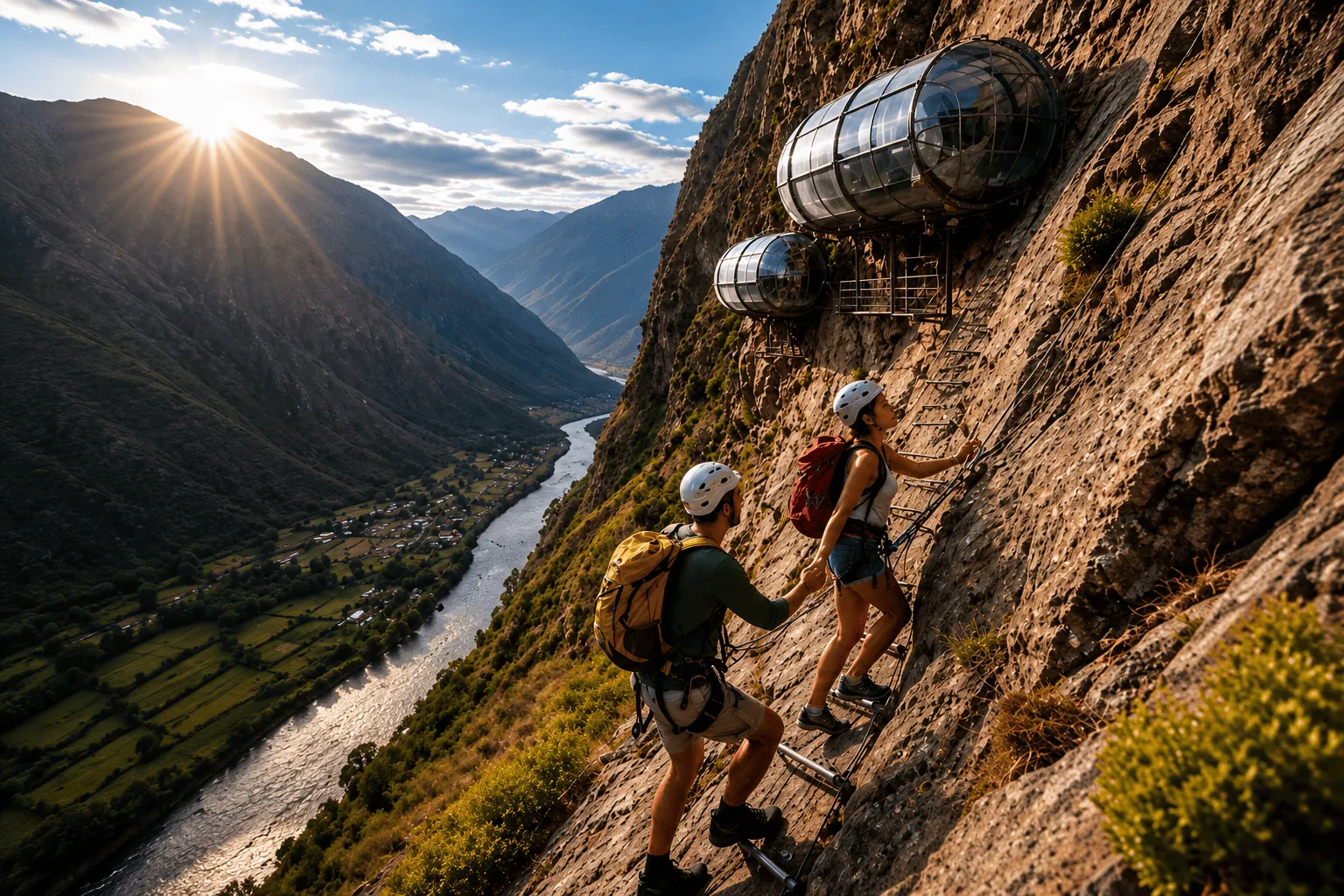
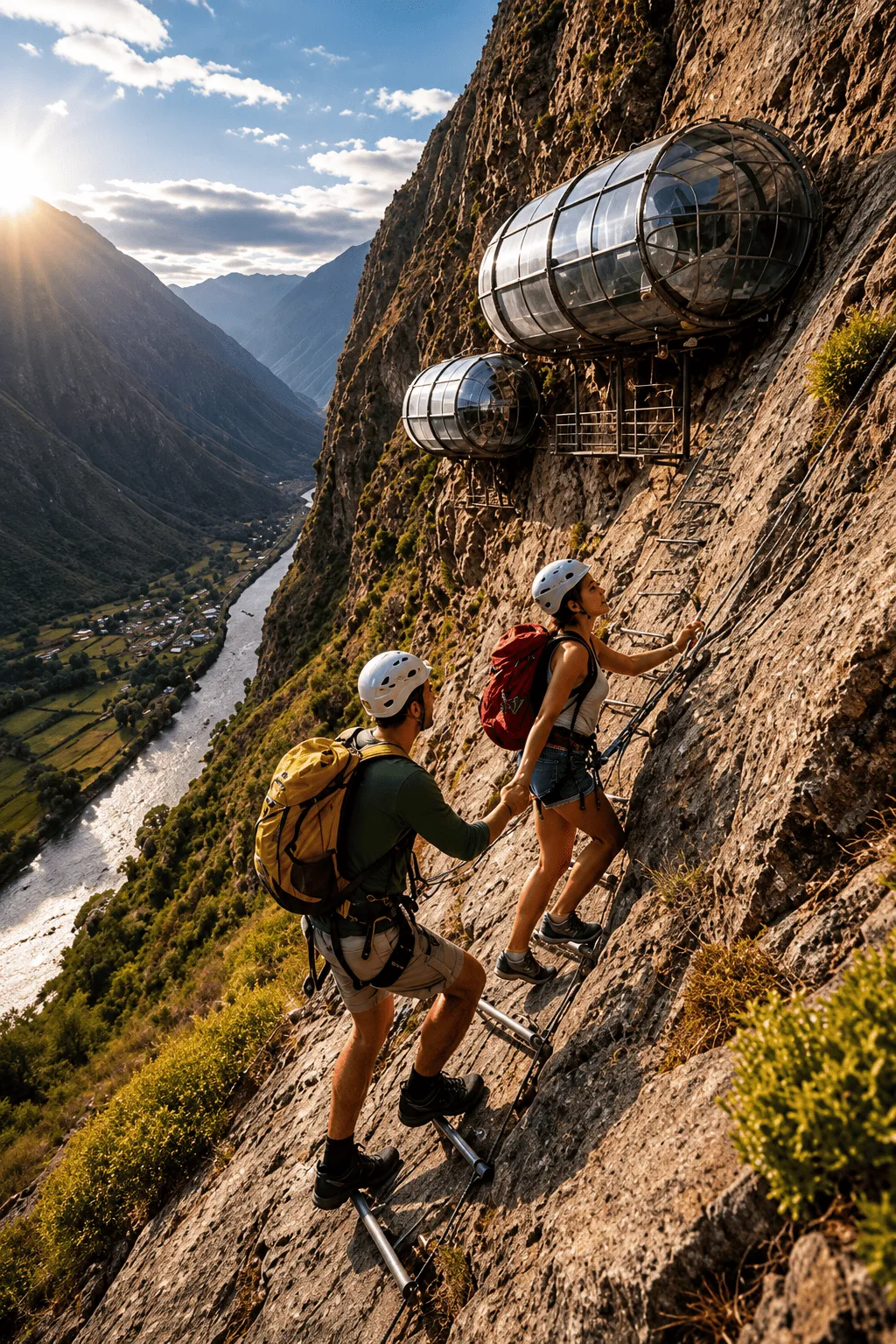
Among the most iconic expressions of this new paradigm is Sky Lodge, perched dramatically on the cliffs above Urubamba—a site so breathtaking it feels like stepping onto a film set from The Lord of the Rings.
But Sky Lodge is no fantasy. It’s architecture born of audacity and respect.
Design & Engineering: A Dialogue with the Andes.
The lodge features three transparent acrylic capsules—each suspended 120 meters (400 ft) above the valley floor—connected by a steel walkway and accessed via a 400-meter zipline (optional) or a secure staircase. Designed by Peruvian architects Luis Alva and Juan Carlos Dextre, the capsules were engineered to withstand seismic activity, high winds, and extreme temperature shifts—proving that innovation and tradition can coexist.
Each capsule is a self-contained sanctuary:
King-sized bed draped in handwoven alpaca wool.
Glass walls offering 270° panoramic views of snow-capped peaks (Salkantay, Veronica, Pitusiray).
Private terrace with heated outdoor shower and fire pit.
Solar-powered lighting, composting toilets, and rainwater harvesting systems.
The genius lies not in spectacle alone—but in intimacy. At night, with the Milky Way blazing overhead and the Urubamba River whispering below, you don’t feel exposed—you feel held. The mountains aren’t distant scenery; they’re your companions.
Guests often describe the experience as “sleeping inside a dream.” One traveler wrote: “I woke at 3 a.m. to the sound of condors circling above my bed. I didn’t reach for my phone. I just watched—and remembered how small, and how blessed, I am.”
Beyond Sky Lodge:The Full Spectrum of Sacred Valley Glamping
While Sky Lodge captures headlines, the Sacred Valley’s glamping scene is richly diverse catering to every traveler’s rhythm and preference.
1. Boutique Tent Camps (e.g., Sol y Luna, Inkaterra Hacienda Urubamba)
Nestled among terraced fields and orchards, these lodges offer spacious canvas tents with wooden decks, en-suite bathrooms, and heated floors. Think: rustic elegance meets five-star service. Morning coca tea is served on your private terrace as llamas graze beside ancient Inca irrigation channels. Here, luxury means silence, space, and stewardship.
2. Eco-Cliffside Villas (e.g., El Albergue, Tambo del Inka)
Modern adobe-and-wood villas carved into hillside slopes, blending seamlessly with the landscape. Floor-to-ceiling windows frame mountain vistas; indoor-outdoor showers let you bathe beneath open sky; and rooftop hot tubs filled with mineral water invite sunset reflection. These properties prioritize sustainability—using biogas, native plants for landscaping, and partnerships with nearby communities.
3. Community-Integrated Glamps (e.g., Pachar Lodge, Willkamayu)
For those seeking deeper connection, some lodges operate in partnership with Quechua families. Guests stay in elevated cabins built by local artisans, participate in weaving or farming workshops, and share meals prepared with ingredients grown onsite. The glamping experience here isn’t about isolation—it’s about reciprocity. As one hostess said: “We don’t serve tourists. We welcome guests into our home—and hope they leave carrying part of our spirit.”
The True Luxury:Time, Space, and Presence
What makes Sacred Valley glamping truly transformative isn’t the king bed or the glass wall—it’s the permission it grants you to slow down.
In a world of hyper-connectivity, these lodges intentionally limit Wi-Fi (often only in common areas), encourage digital detox, and design experiences that pull you outward—not inward. Mornings begin with guided meditation on a cliffside platform. Afternoons invite you to hike to hidden Inca ruins or learn to spin alpaca fiber. Evenings culminate in communal dinners under string lights, where stories flow as freely as the pisco sour.
Children thrive here too. Many lodges offer “junior explorer” programs: building miniature andenes (terraces), identifying bird calls, or helping prepare chuño (freeze-dried potatoes) with local elders. For kids, this isn’t education—it’s enchantment.
And for adults? It’s reclamation. Reclaiming breath. Reclaiming wonder. Reclaiming the simple joy of watching stars emerge, one by one, over the Andes.
Why This Is the PerfectPrelude to Cusco, Machu Picchu & Beyond
Glamping in the Sacred Valley does more than ease altitude adjustment—it deepens your entire Peruvian journey.
When you arrive in Cusco after three nights in the valley, you don’t just feel physically adjusted—you feel culturally attuned. You’ve already walked Inca paths, tasted quinoa grown in ancient terraces, heard Quechua spoken at breakfast. You understand that the stones of Sacsayhuamán weren’t built by laborers, but by ancestors who saw mountains as living beings.
At Machu Picchu, you won’t just see a ruin—you’ll recognize the geometry of its temples, the purpose of its water channels, the reverence embedded in every stone. You’ll stand at Inti Punku at sunrise not as a tourist, but as a pilgrim who has already learned to listen to the land.
This is the power of intelligent travel: beginning not at the destination, but at the threshold.
Final Thought:Luxury Is Not What You Have—It’s What You Feel
The finest hotels in Lima may have marble floors and Michelin chefs. But none can give you what the Sacred Valley offers at dawn: the scent of eucalyptus and woodsmoke, the soft bleat of a distant llama, the quiet certainty that you are exactly where you’re meant to be.
Luxury glamping here isn’t about escaping nature—it’s about returning to it, with grace, gratitude, and full presence.
As the Quechua saying goes:
“Q’uyuq kawsayninchik, q’uyuq runakunanchik”
“Our life is woven; our people are woven.”
At Sky Lodge, in a tent overlooking the Urubamba, or on a private deck sipping coca tea—you become part of that weave. Not a visitor. Not a guest.
A thread in the tapestry of the Andes.