

After spending several unforgettable days exploring the Sacred Valley and standing in awe before Machu Picchu, I finally returned to Cusco. By then, my body had already adapted to the altitude, and my mind had begun to slow into the rhythm of the Andes. Yet Cusco itself still held mysteries waiting to be discovered.
A city written in stone
Cusco is not a city that reveals itself immediately. It invites you to listen, to look closely, and to feel the centuries layered within its streets.
Long before Spanish conquistadors arrived, Cusco was the sacred capital of the Inca Empire—the center of a vast civilization that stretched across much of South America. The Incas believed the city was shaped like a puma, a powerful Andean symbol of strength and wisdom. At its heart stood temples covered in gold, plazas filled with ceremony, and roads that connected the empire’s farthest corners.
When the Spanish arrived in the 16th century, they did something unusual: rather than destroy the city entirely, they built their colonial structures directly atop the Inca foundations. The result is what makes Cusco so fascinating today—a living fusion of Inca precision and Spanish elegance, where two civilizations coexist in the same walls, streets, and plazas.
It was the perfect place to experience the exclusive walking tour created by our team at PeruTourism, a journey designed not simply to show visitors Cusco, but to help them understand it.
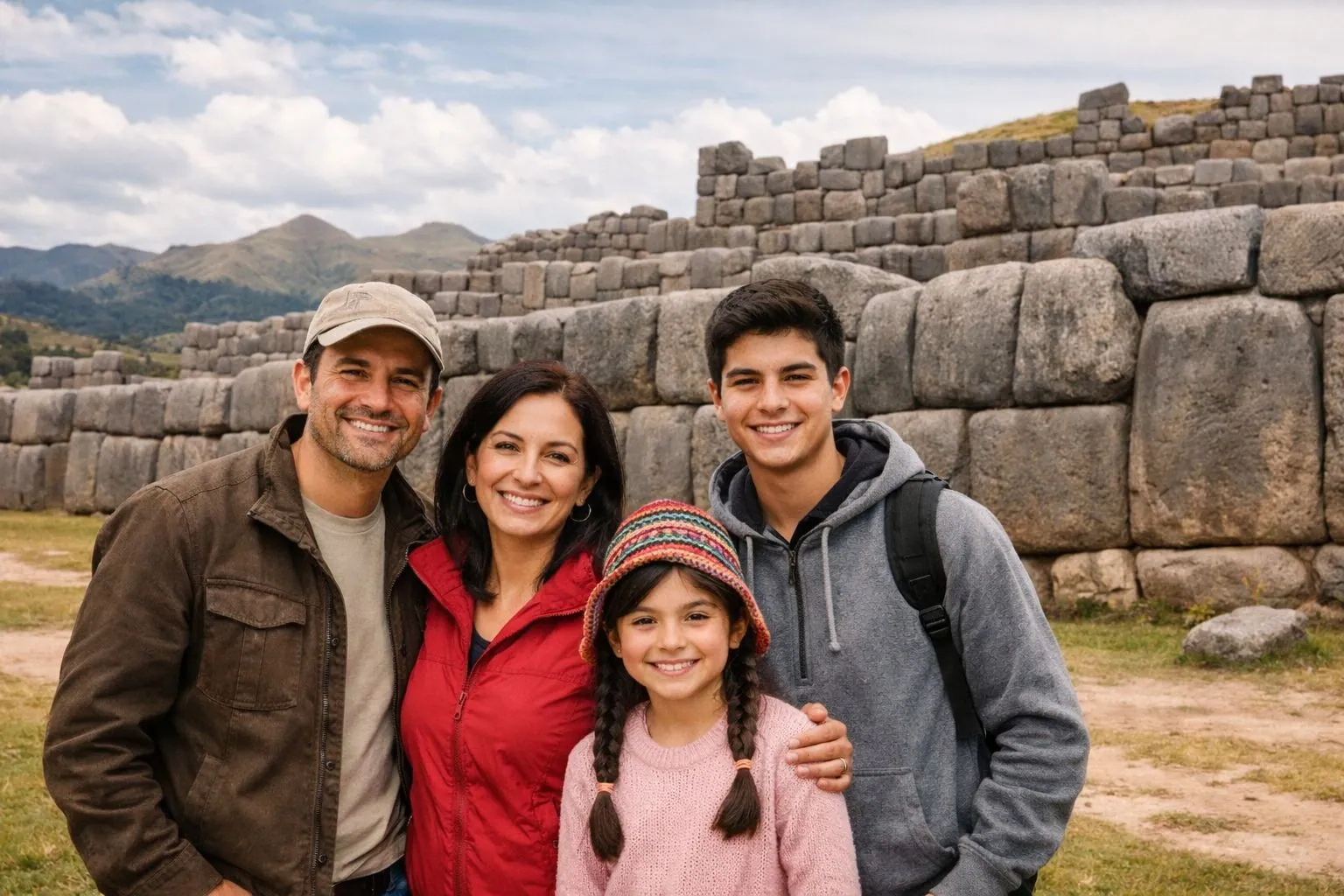
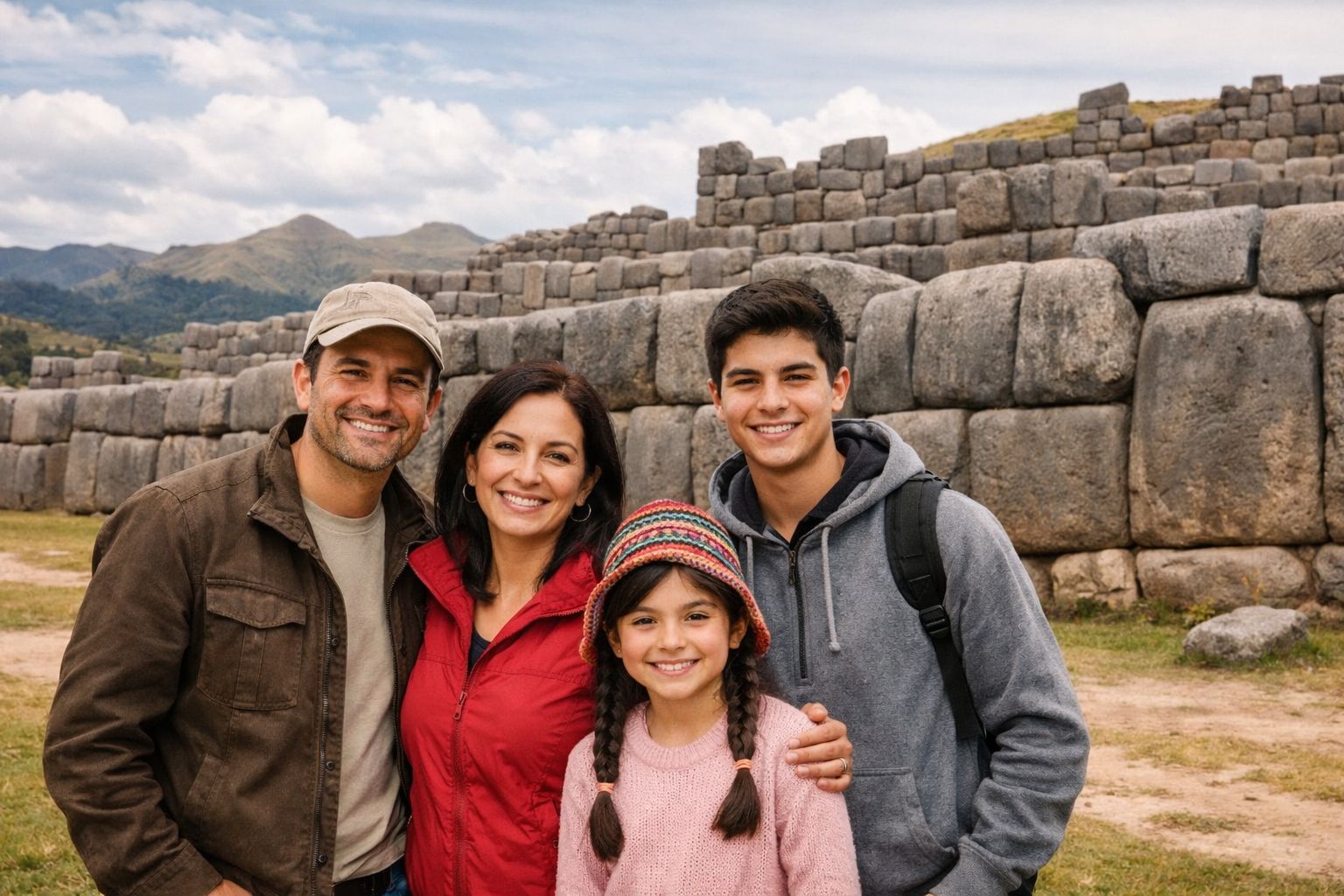
Our exploration began with a short drive that took us up the hills above the city, where the magnificent fortress of Sacsayhuamán rises over Cusco like a guardian carved from the mountains themselves.
Standing there, overlooking the entire valley, I could see the terracotta rooftops of Cusco spread out below like a sea of tiles framed by mountains. The enormous stone walls of Sacsayhuamán are among the most impressive feats of engineering in the ancient world. Some stones weigh over a hundred tons, yet they fit together with astonishing precision—no mortar, no gaps, just pure mastery of stone.
But the real magic of Cusco begins when you descend back into the city.
The streets that ask you to slow down
From Sacsayhuamán we began walking down toward the historic neighborhoods, following a path that slowly leads into the heart of Cusco’s soul.
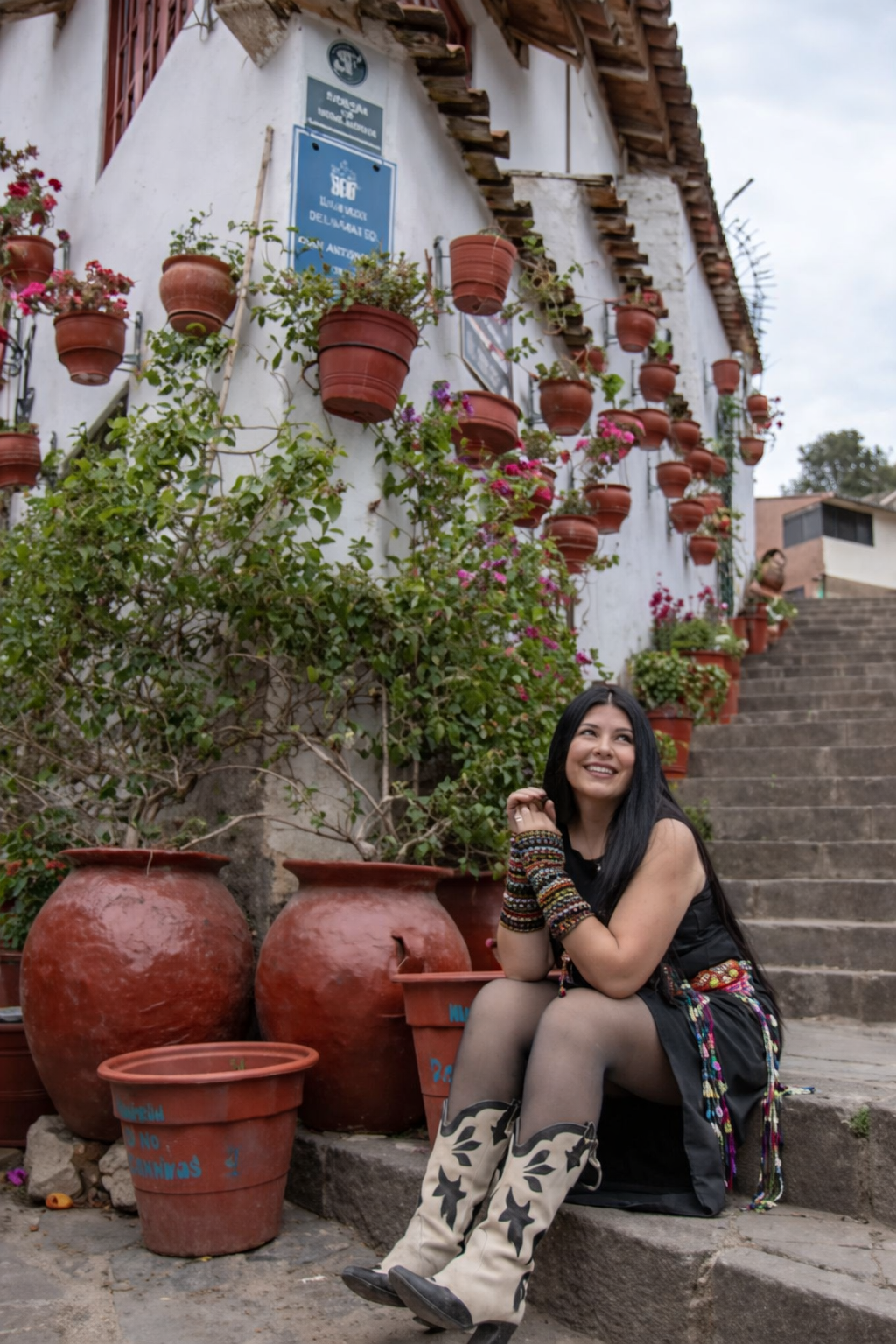
One of my favorite little discoveries in Cusco is the charming street called Siete Borreguitos. As I walk down its narrow stone pathway, I always slow my pace because the scene feels almost like something from a painting. The cobblestone steps cascade gently between whitewashed colonial houses, and along the stairway colorful pots of flowers decorate the walls and balconies, adding bursts of red and purple against the warm stone.
What I love most is the precise corner where Siete Borreguitos meets another narrow street that continues descending toward the historic center. From that exact spot, the view opens beautifully over the rooftops and layered streets of Cusco, with the mountains quietly framing the horizon. It’s one of those magical corners where I always pause for a moment—and where travelers instinctively take out their cameras to capture a photograph that will forever remind them of the soul of this city.
This charming street is also known for its playful mystery—the street where seven small stone sheep are carved into the walls. They are easy to miss if you are not paying attention. As we walked, our guide invited us to look carefully along the stone walls. ‘Can you find them?’ he asked with a smile.
And suddenly we were all searching, laughing as we spotted the tiny carved sheep hidden within the stones. It felt like a secret the city shares only with those who take the time to look closely.
San Blas, alive with creativity
Continuing down the path, the atmosphere gradually changes as you enter one of the most beloved neighborhoods in Cusco: San Blas.
San Blas is the artistic heart of the city. Its narrow cobblestone streets wind up and down the hillside, lined with whitewashed houses and blue wooden balconies. Walking there feels almost like stepping into another era.
Every staircase seems to hide a small artisan workshop. Behind open doors, local artists carve wood, shape pottery, paint vibrant Andean scenes, and weave textiles using techniques passed down for generations.
I paused more than once along the way, drawn by the sound of a chisel against wood or the colors of handwoven fabrics hanging in the sunlight. There is something deeply inspiring about San Blas. It is not only beautiful—it is alive with creativity.
Where two histories meet
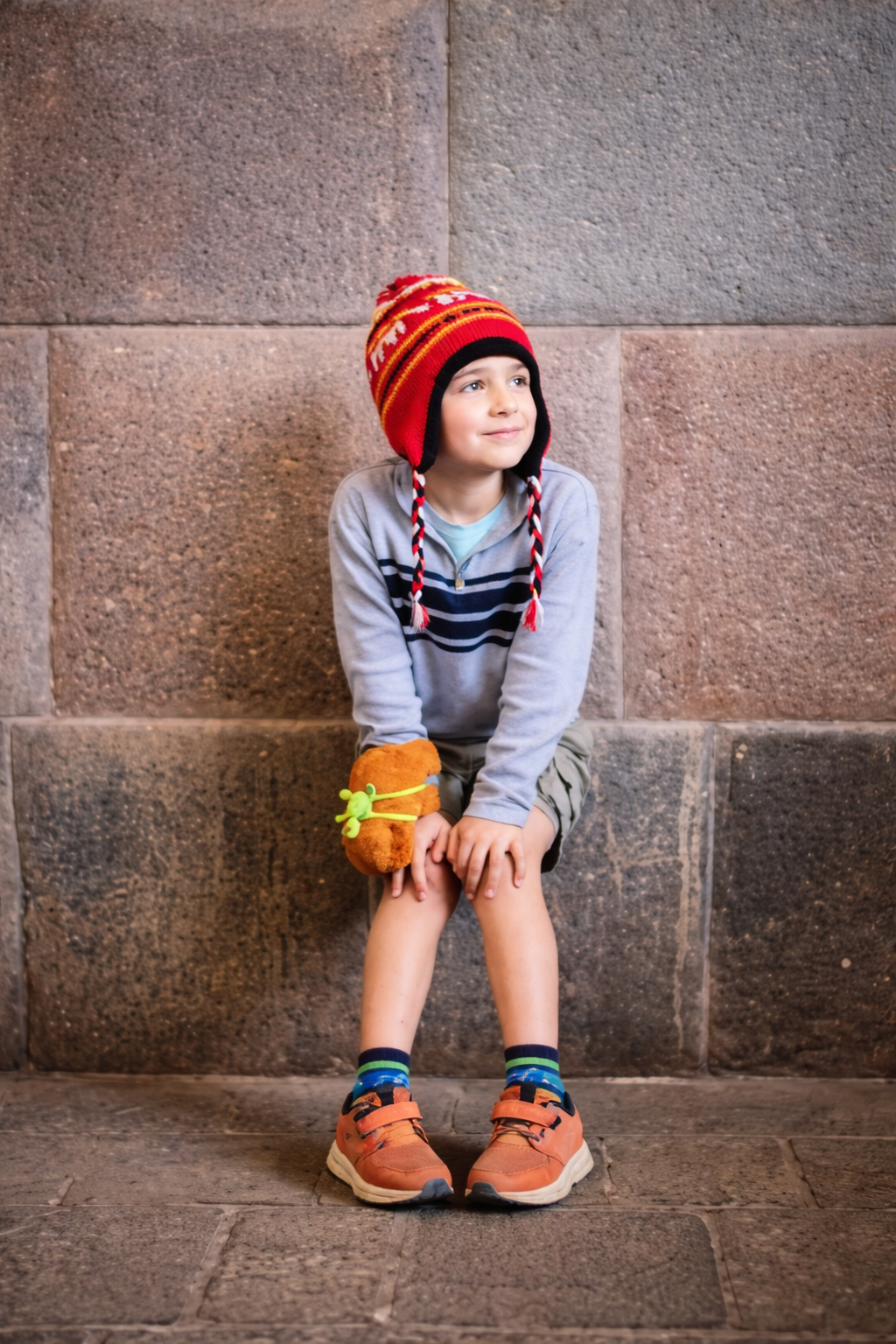
Eventually the streets opened onto one of the most significant sites in Cusco: Koricancha, the Temple of the Sun. For the Incas, this was the most sacred temple in the empire. Its walls were once covered in sheets of pure gold that reflected the sunlight like a radiant mirror.
When the Spanish arrived, they built the colonial church of Santo Domingo directly on top of the temple’s foundations. Today, the contrast is extraordinary.
Below, the perfectly cut Inca stone walls remain intact—smooth, flawless, and immovable. Above them rise the arches and white walls of the colonial church. As the afternoon light touched the ancient stones, I watched how the sun seemed to kiss the Inca walls, illuminating them with a warm golden glow.
In that moment I felt once again what makes Cusco so extraordinary: this city does not erase its past. It layers it.
A city of small wonders
And so we continued walking. Cusco is a city that rewards curiosity. Around every corner, another story waits.
One of the most famous—and fascinating—stops on our route was the Stone of the Twelve Angles. At first glance it may appear like just another stone wall. But when you look closely, you notice something remarkable.
One single stone has twelve perfectly cut angles, each one fitting precisely with the surrounding stones like a puzzle piece created centuries ago. There is no mortar holding the stones together. Yet they have remained perfectly aligned through earthquakes and centuries of time.
Standing there, I found myself running my hand along the cool surface of the stone, imagining the master builders who shaped it so precisely long before modern tools existed.
A sweet ending at the plaza
From there our walk took a delightful turn—toward one of Cusco’s sweetest surprises. Hidden along the historic streets is the Chocolate Museum, a place where the rich tradition of cacao meets the playful spirit of travelers discovering Peru.
Inside, the warm aroma of chocolate fills the air. Displays explain the history of cacao in the Americas, and visitors can even create their own chocolate bars using local ingredients. It is a joyful, unexpected stop that always brings smiles.
Finally, our walk led us toward the heart of the city: Cusco’s Plaza de Armas. Every time I arrive there, I feel the same sense of wonder. The plaza is surrounded by magnificent colonial arcades, historic churches, lively cafés, and the constant movement of travelers and locals sharing the same space.
We ended our walk in the most Cusqueñian way possible—by sitting down at a small café overlooking the plaza. Some travelers ordered coffee. Others chose artisanal gelato. I chose both a coffee and a moment to simply watch the life of the city unfold.
Cusco is not a city you simply visit. It is a city you decode, corner by corner, like a living map of stone, history, and soul. It whispers its stories slowly—through its stones, its streets, its people. And if you listen carefully, it will stay with you forever.