


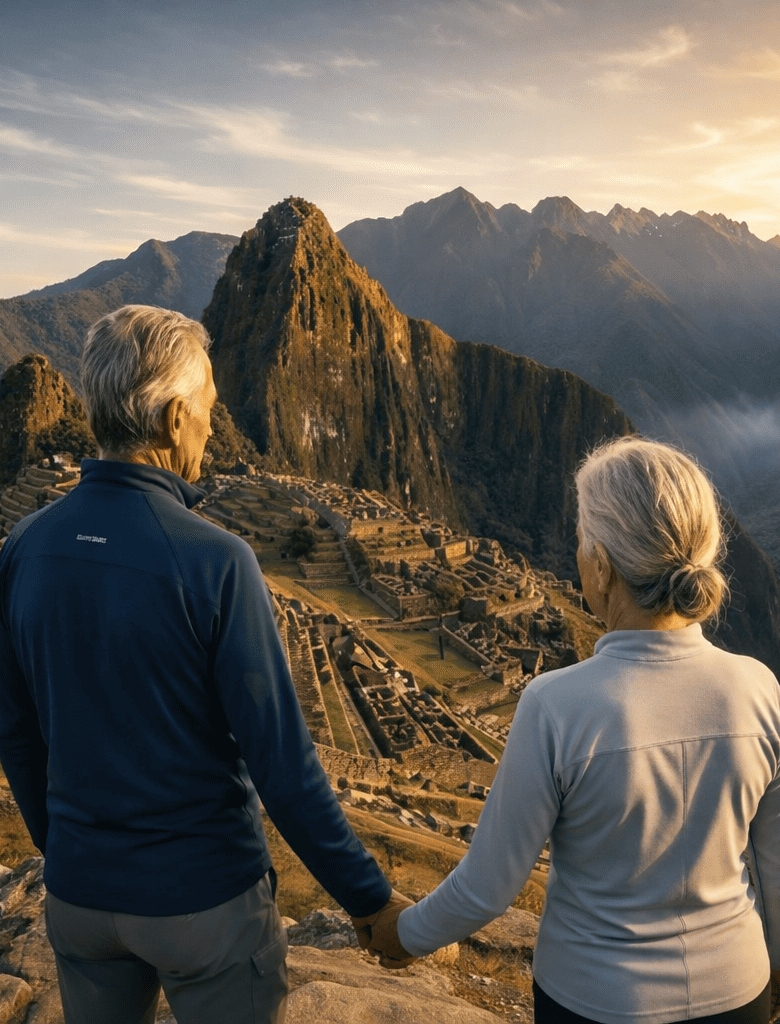
At 71, Eleanor and her partner stood hand in hand at sunrise in Machu Picchu. Their hearts raced from joy, not altitude sickness. It was not luck, but a gentle strategy that taught them to listen to their bodies.
Lima: where the journey begins
After a long flight from Austin, they chose two peaceful nights in Miraflores instead of flying straight to Cusco. Rest, ocean air and a slow walk through Barranco gave their bodies time to recover from travel.
A visit to Museo Larco became a moving introduction to Peru's history and culture. That rest was not a luxury—it was the foundation for everything that followed.
The Sacred Valley: a gentle gateway
They flew to Cusco, but did not stay there. Their guide met them with coca tea and led them down to Ollantaytambo in the Sacred Valley, at a lower elevation than Cusco.
Among Inca terraces and cobblestone alleys, they walked slowly, breathed deeply and let their bodies adapt before asking more of them.
Machu Picchu without rushing
By the third day, they felt ready for the train to Aguas Calientes and the early visit to Machu Picchu. At sunrise, there was no dizziness or headache—only awe.
Their experience showed that a thoughtful itinerary can make the journey feel calmer, more comfortable and more present.
Then Cusco, at the right moment
After Machu Picchu, they returned to the Sacred Valley to explore Pisac, Maras and Moray. At these elevations, their bodies had already adapted.
Only then did they continue to Cusco. The higher altitude was still noticeable, but they arrived steady, confident and able to enjoy the city.
Respect the Andes
The Andes do not demand brute strength; they ask for respect. Patience, rest, hydration and a gradual route can make a profound difference.
At 71, they left with a story of thoughtful travel—and plans for their next adventure.