
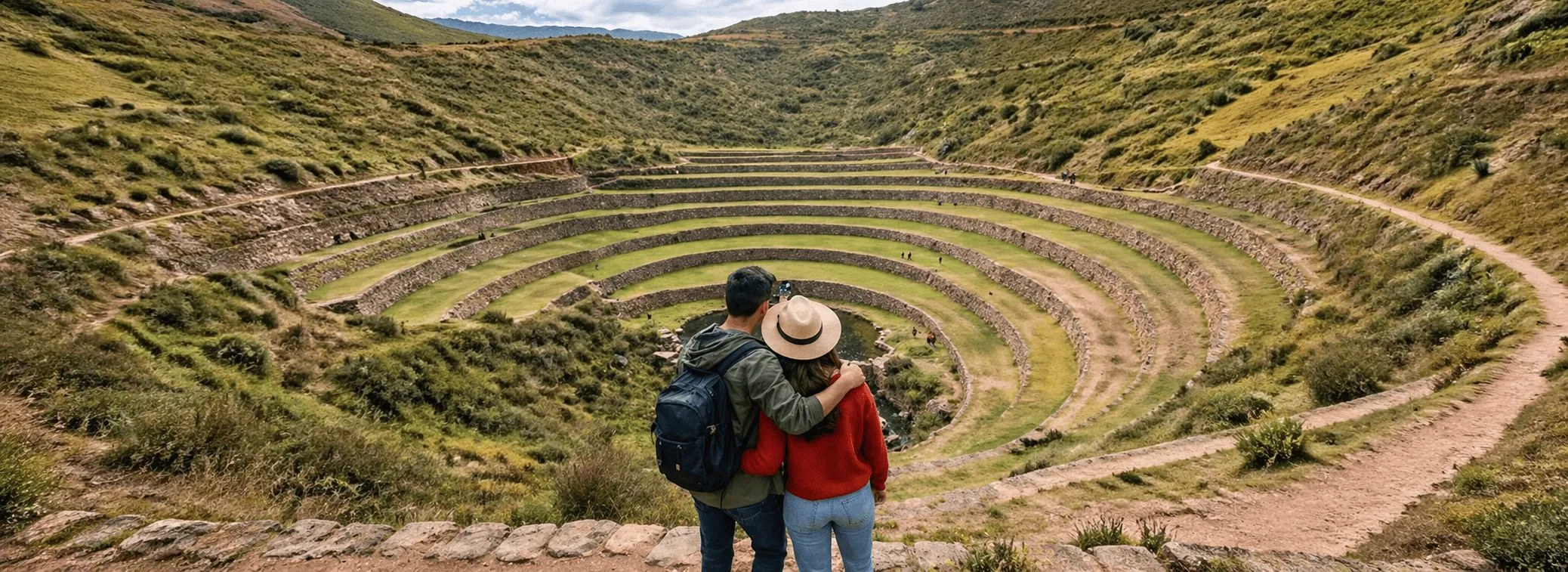

A journey into one of the Andes' most intriguing landscapes, where agriculture, engineering and nature come together in extraordinary circles of stone. Ancient terraces, changing microclimates and a remarkable lesson in working with nature
The first thing you notice about Moray isn't the terraces. It's the silence. Standing at the edge of this extraordinary landscape, the world seems to fall away. No traffic. No city noise. Just the wind moving across the high Andes and enormous concentric terraces disappearing into the earth.
Mateo had seen Moray many times before. For Lena, it was the first. That difference would shape the way we experienced the morning: one of us already knew something about the mysteries hidden inside these circles; the other was about to discover them. “Moray isn't just a beautiful archaeological site,” Mateo said as we looked down. “It's a conversation between humans and nature that began centuries ago.” Standing there in the silence, it felt as though the conversation was still taking place. Moray isn't just ruins. It's a conversation between humans and nature.
Discovering Moray in Peru's Sacred Valley
We arrived early, while the Sacred Valley was still waking. The morning air was crisp and the surrounding hills seemed almost untouched. As we followed the path toward the main terraces, nothing quite prepared Lena for that first view. She stopped. Below us, immense circular depressions opened into the landscape, with stone terraces descending level after level toward their centers. The geometry seemed almost too precise to belong to the natural world. “Tell me,” Mateo said. “What do you see?”
Lena stared for a moment. “Circles. Terraces. Beauty.” Mateo smiled and pointed toward the levels below. “That's what everyone sees first. Now let's try to see what the Incas may have seen.”
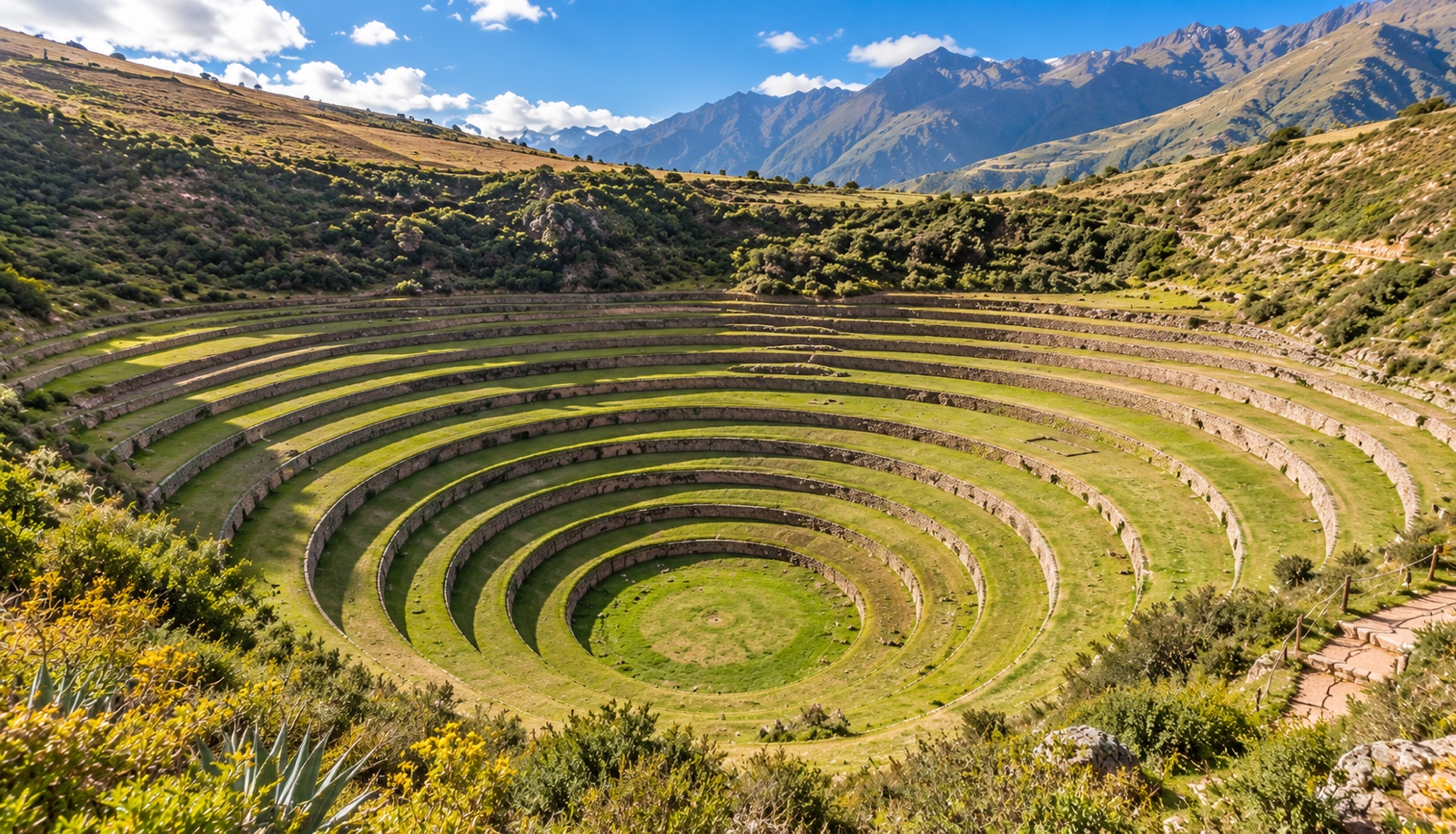
Moray's extraordinary concentric terraces descend into the earth in the highlands of the Sacred Valley.
From above, the circles are beautiful. But the longer you look, the more questions they create. Why build agricultural terraces inside enormous concentric depressions? Why do the levels change as they descend? How did water move through them? And why create something so elaborate here, high in the Andes? Moray does not reveal its secrets immediately. That is part of its fascination.
Why Did the Incas Build the Terraces of Moray?
The exact purpose of Moray continues to inspire study and interpretation. One of the most compelling explanations is that the Incas used these terraces for agricultural experimentation, taking advantage of differences in elevation, sunlight, moisture and temperature to observe how crops responded to changing conditions. Modern research continues to explore Moray's remarkable microclimates and the way its geometry, soil, water and environment interact. Studies have measured significant temperature differences between upper and lower levels, reinforcing the idea that the terraces could create distinctly different growing conditions.
Suddenly, the circles looked different. They were no longer simply beautiful terraces. They began to resemble an enormous experiment written into the landscape.
“Think about the Inca Empire,” Mateo explained. “It stretched across dramatically different environments—from coastal deserts to high mountains and toward tropical forests.” Feeding communities across such varied landscapes required extraordinary agricultural knowledge. Potatoes, maize, quinoa and numerous Andean tubers had to thrive in places where altitude, frost, rainfall and soil could change dramatically within relatively short distances. The Incas inherited generations of Andean agricultural knowledge and organized it on an extraordinary scale. Moray may have been one of the places where that knowledge was tested, adapted and refined.
How Moray's Terraces Created Different Microclimates
As we walked closer to the terraces, Mateo pointed toward the levels descending below us. “Look at the shape.” Each terrace occupies a slightly different position within the depression. Its depth, orientation toward the sun, exposure to wind, moisture and the heat retained by soil and stone all influence its immediate environment.
Beneath the visible surface, layers of soil, sand, gravel and stone also helped with drainage, moisture regulation and structural stability. It was an extraordinary thought. Centuries before weather stations, digital sensors or computer models, Andean farmers were observing the same fundamental forces we study today: sun, water, soil, temperature and altitude. They simply learned to read them differently.
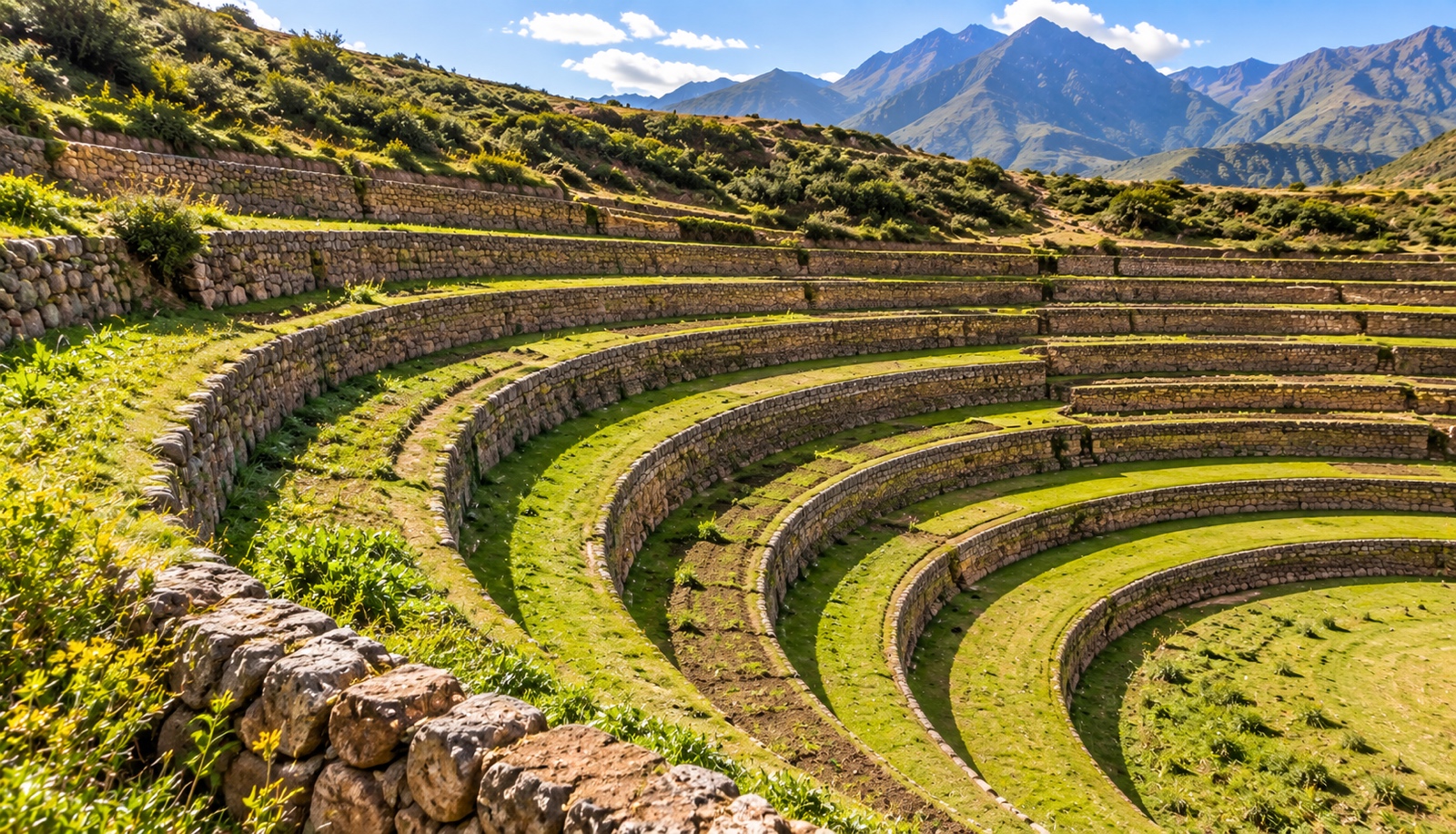
Different levels within Moray create variations in sun exposure, moisture and temperature—one reason the site has long fascinated researchers.
Lena placed her hand against one of the stones warmed by the morning sun. It was such a simple gesture, yet suddenly the science became tangible. Stone absorbs warmth. Soil retains moisture. Walls provide shelter from the wind. Water moves downhill. Sunlight reaches every surface differently. The genius was not in defeating nature. It was in observing nature carefully enough to work with it. That idea stayed with us as we continued walking.
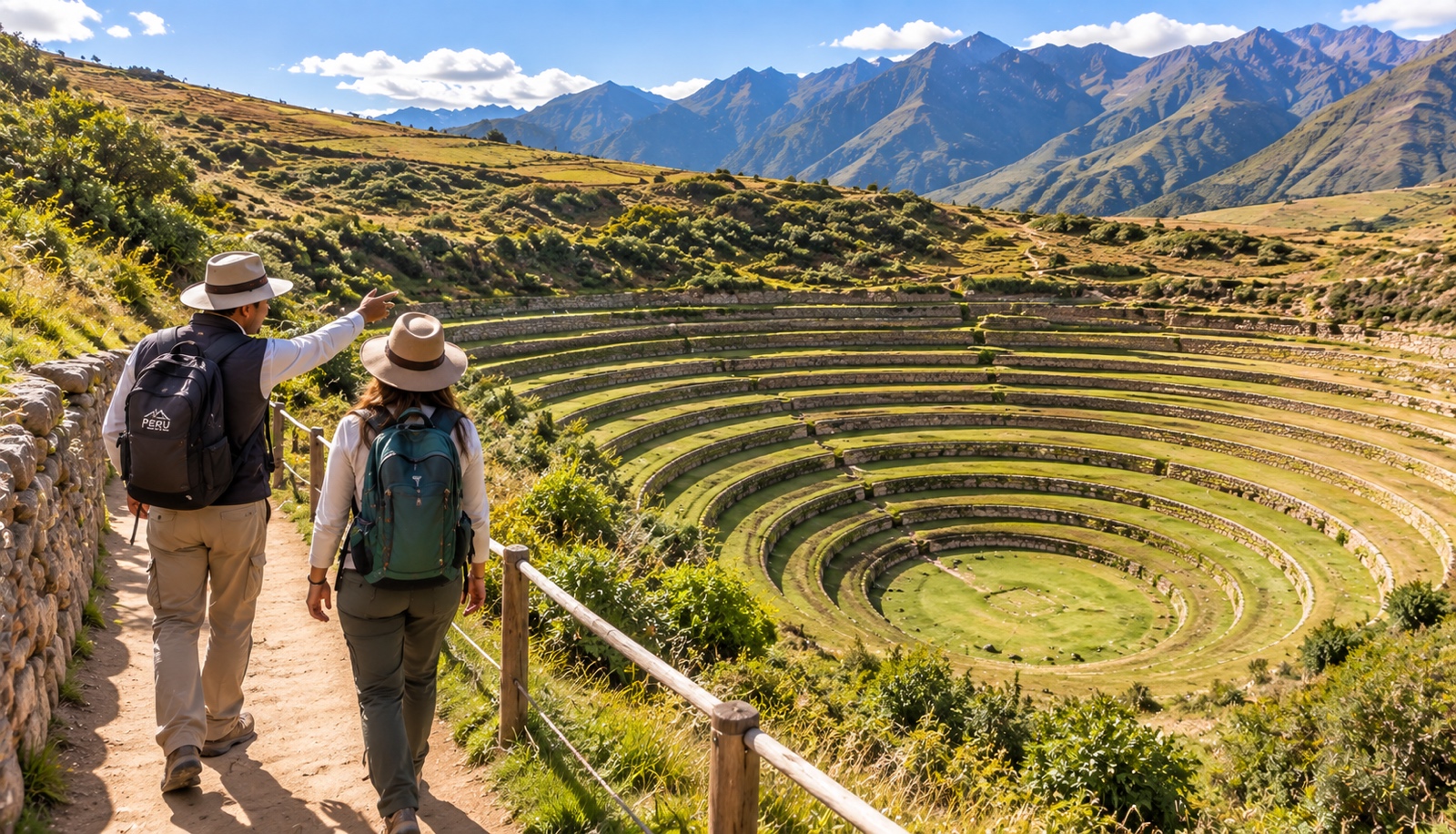
Walking through Moray transforms its geometry from something beautiful into something deeply intriguing.
The Agricultural Genius Behind Moray
To understand Moray, Mateo explained, you also have to understand the Andes. Agriculture here has never been simple. Elevation changes quickly, nights can be cold, rainfall is seasonal and mountain slopes make cultivation difficult. Yet Andean societies developed an extraordinary diversity of crops and agricultural techniques over thousands of years. The Incas built upon that accumulated knowledge, constructing terraces, irrigation channels and storage systems adapted to dramatically different landscapes across Tawantinsuyu. But Moray appears exceptional even within that sophisticated system.
Unlike terraces built primarily to create more cultivable land on steep slopes, Moray's concentric design created a compact landscape with different environmental conditions from one level to another. And agriculture in the Inca world was never only technical. It was also deeply connected to the sacred. The sun determined agricultural cycles. Water was precious. Pachamama—the living earth—was not simply soil to be exploited. Human beings were part of the landscape. Perhaps that is why Moray feels so different from a modern laboratory. There are no walls separating the experiment from nature. Nature is the laboratory.
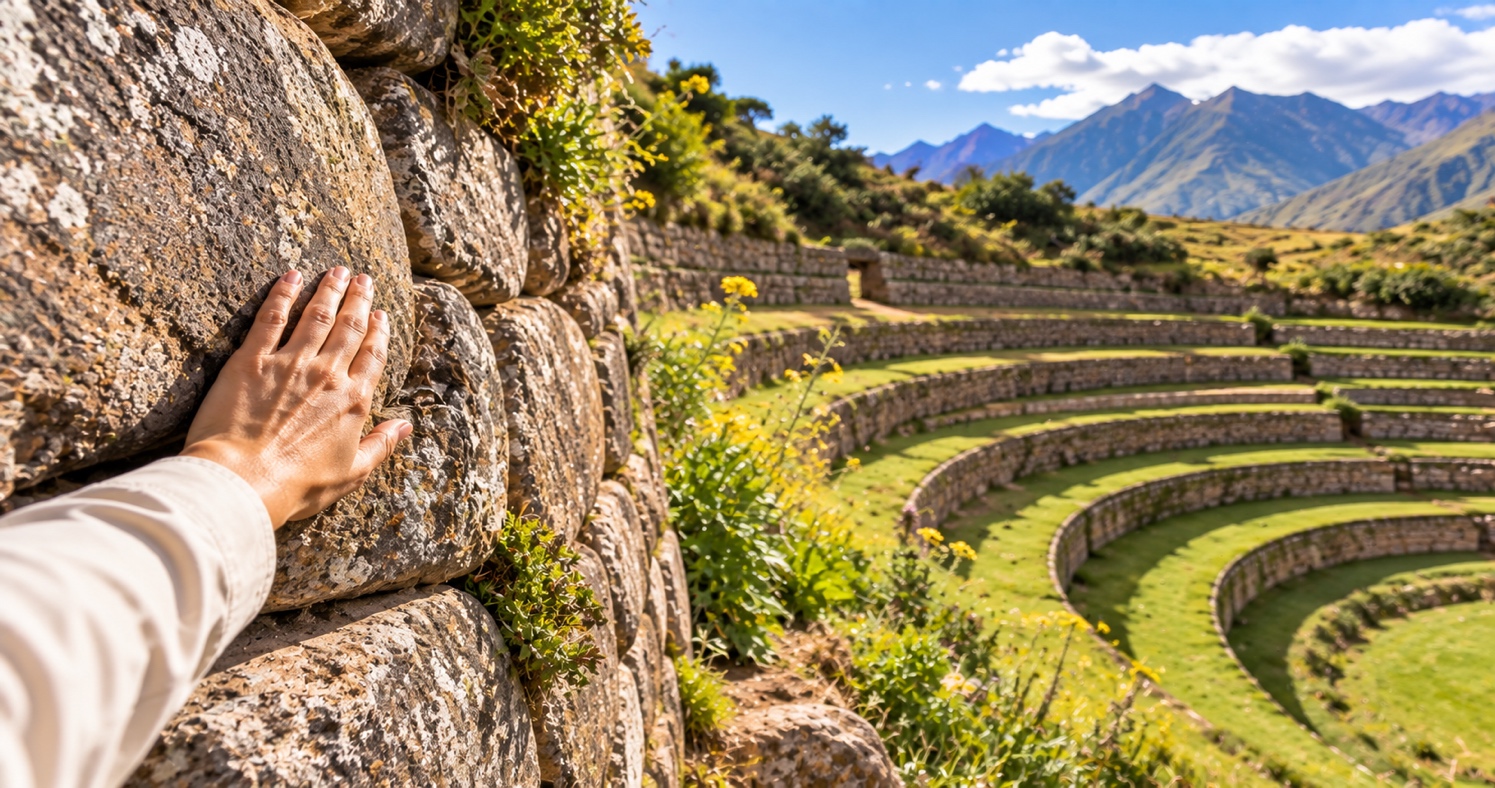
Stone, soil, water and sunlight were all part of the environmental intelligence behind Andean agriculture.
Standing there, we began thinking about the extraordinary diversity of crops that originated or developed in the Andes: thousands of potato varieties, maize adapted to different elevations, quinoa, kiwicha, oca, olluco and other crops capable of surviving demanding mountain environments. The achievement was not simply growing food. It was understanding what could grow, where it could grow and how diversity could be preserved. That knowledge helped sustain societies across one of the most geographically challenging regions on Earth—and its legacy did not disappear with the Inca Empire. Andean farmers continue preserving remarkable crop diversity today, while researchers study traditional agricultural knowledge for what it can teach us about biodiversity and adaptation. Moray connects two worlds: ancient observation and modern science.
What Moray Can Teach Us Today
By the time we began climbing back toward the upper viewpoint, the sun was higher and the terraces had changed color. The morning shadows were disappearing, making the geometry even clearer. Lena stopped once more and looked back. At first, she had seen circles. Now she saw a civilization paying extraordinary attention to its environment. Moray continues to fascinate researchers not only because of its archaeological importance, but because many of its underlying principles feel surprisingly contemporary: adapting agriculture to local conditions, managing water carefully, protecting soil, using microclimates and working with topography instead of erasing it.
Those ideas feel particularly relevant today as agriculture faces changing climates, soil degradation and increasing pressure on water resources. There is something remarkable about using satellites, environmental simulations and digital models to understand techniques conceived centuries before any of those technologies existed. That doesn't mean we should romanticize the past. Many questions about Moray remain unanswered. Perhaps that uncertainty makes the place even more fascinating. Moray doesn't give us a simple answer. It asks us to look more closely.
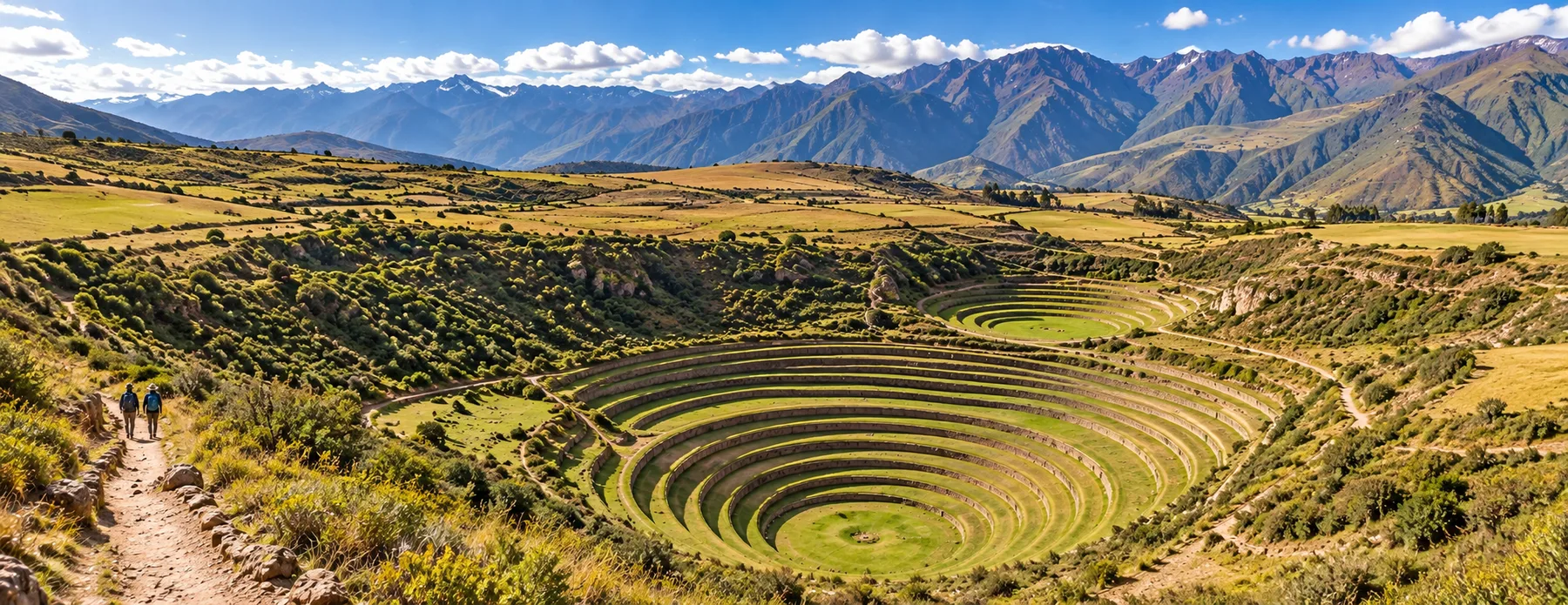
The wind moved again across the terraces, and for a moment neither of us spoke. The circles below seemed less like ruins now and more like an idea that had somehow survived: observe before changing, adapt rather than conquer, understand that soil, water, climate and human life belong to the same system. Six centuries later, Moray is still teaching. You only have to stand quietly enough to listen. The Incas taught the earth to sing. And if we listen closely, we can still hear the melody.